
Quick Answer: Most established small and mid-size businesses in Dallas-Fort Worth spend $4,000 to $15,000 on a custom, high-performing website in 2026. That money pays for technical architecture, mobile speed and secure integrations, not just HTML and CSS. A cheap outsourced template usually gets paid for twice: it leaks customers, fails Core Web Vitals and often needs a rebuild within a year.
Whenever a Dallas founder asks me why our quote is $8,000 when their cousin offered to do it for $1,000, I open the cousin's last project in a browser and run a speed test while they watch.
It usually takes about five seconds to load on a phone. That's the difference.
Pricing a website isn't a mystery, and it shouldn't hide behind a sales call. You're paying for engineering hours, and engineering hours in this metro aren't cheap. The Bureau of Labor Statistics' May 2025 wage data for Dallas-Fort Worth, released August 13, 2026, puts the mean hourly wage for computer and mathematical occupations at $57.55, against $33.96 for all jobs in the area.
So when a full website is quoted at $500, someone is skipping hours. In my experience leading the engineering team at Vareweb, the price of a site comes down to how much technical debt you're willing to accept.
The build price is only half of it. Yearly ownership costs and Texas sales tax are the parts most quotes leave out, and they're where owners get surprised.
Comparing Dallas Web Design Quotes? Start With a Clear Scope.
Vareweb is a Dallas-based team that designs and hand-codes custom websites from a blank canvas, with no templates. Tell us what you need and we'll give you a scoped quote with no surprises.
Quick Comparison: Website Build Costs in Dallas by Site Type
| Website type | Typical Dallas market quote | Vareweb custom build | Best fit for |
|---|---|---|---|
| Brochure site (1 to 5 pages) | $500 to $1,000 | $1,000 to $1,500 | New firms, solo practices, single-service businesses |
| Small business site (10 to 15 pages) | $1,200 to $1,800 | $1,500 to $2,000 | Contractors, clinics and local service firms that need leads |
| Custom eCommerce | $2,000 to $5,000+ | $3,000 to $6,000+ | Brands selling online with real order volume |
| Corporate site or web app | $6,000 to $10,000+ | $10,000+ | B2B firms, portals, dashboards, multi-location brands |
The market column reflects quotes I've reviewed from DFW business owners, so treat it as a range, not a rate card. Then add the yearly ownership costs and sales tax covered further down.
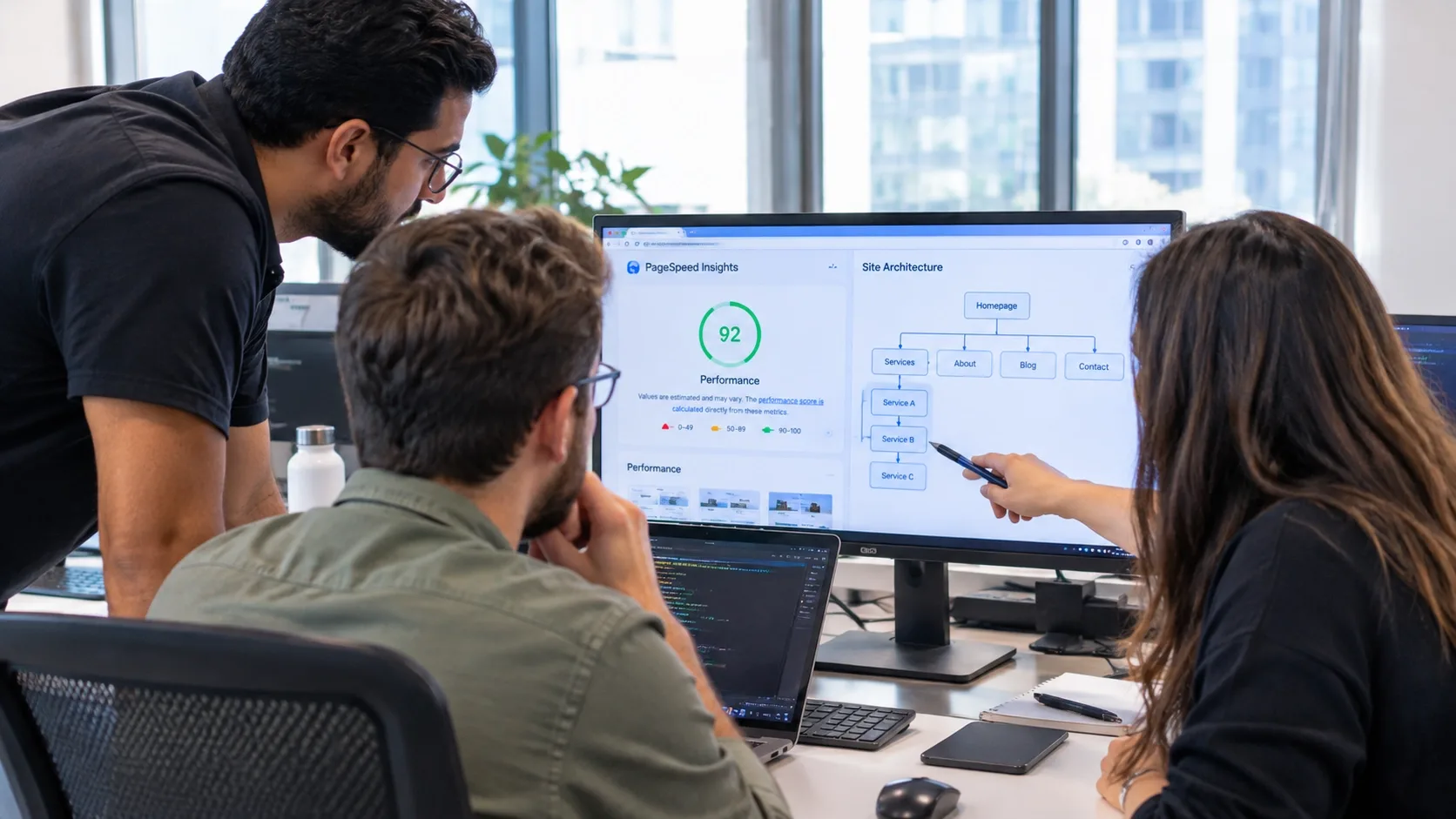
Web Design Cost Dallas: The Engineering Reality Behind Every Quote
A website quote is really an estimate of engineering hours plus the risk you're taking on. Two sites can look identical in a screenshot and cost very different amounts, because one is built to stay fast and secure for years and the other was assembled in a weekend.
That gap is technical debt: every shortcut today becomes a bill later. Building a fast, scalable architecture from day one is exactly why local brands hire professional web design and development services instead of gambling on the cheapest bid.
1. The Brochure Site (The Digital Handshake)
A five-page site sounds simple. Home, about, services, contact and maybe a portfolio page.
So why does a good one still cost $1,000 or more?
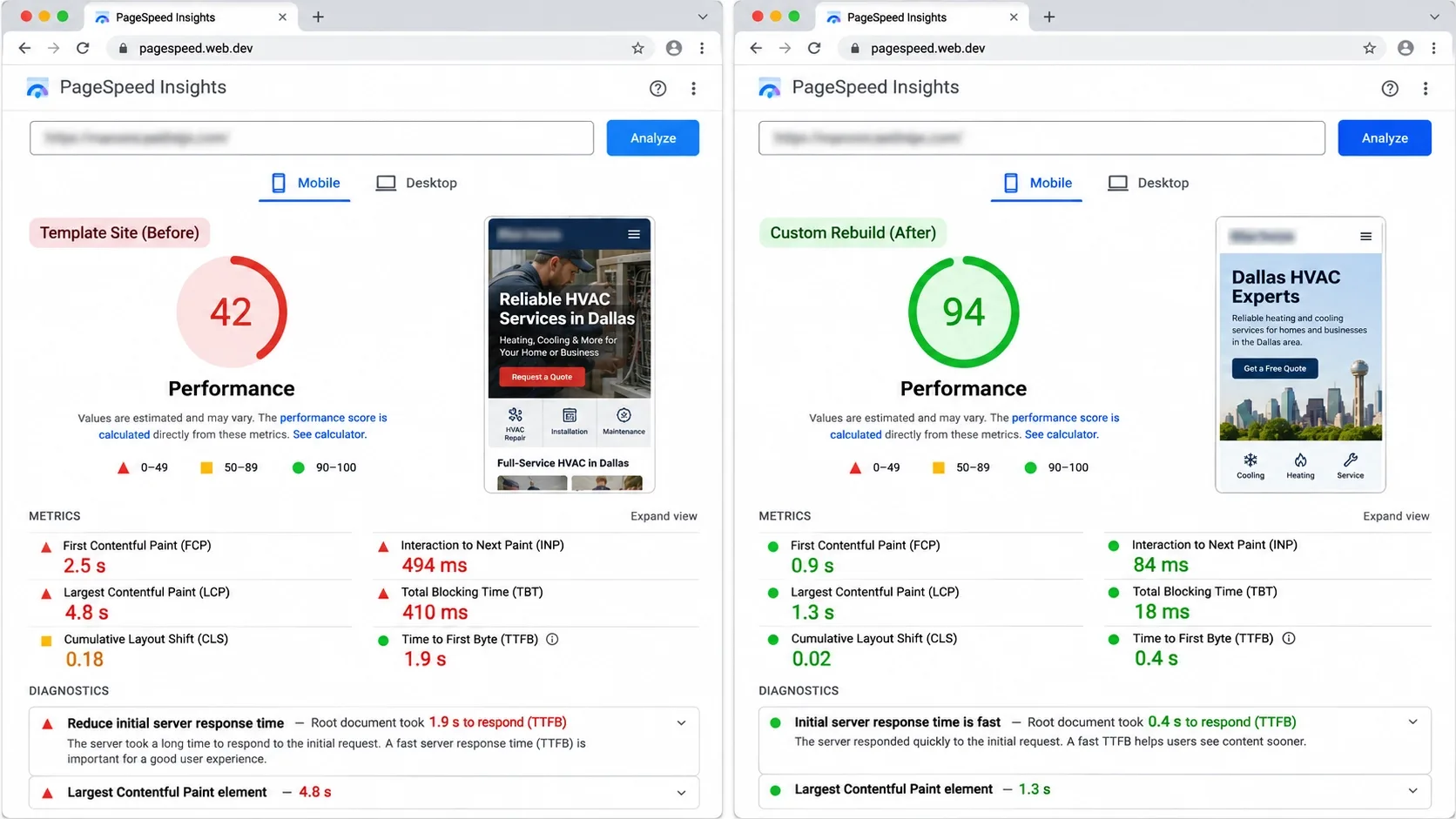
Because "simple" and "fast" aren't the same thing. The $500 version is usually a heavy multipurpose theme with a page builder, ten plugins and a slider nobody asked for. It loads hundreds of kilobytes of code your five pages never use.
The web as a whole is still struggling with this. The 2025 Web Almanac performance chapter, published in January 2026, found only 48% of mobile websites pass all three Core Web Vitals, and just 44% have a good Time to First Byte (TTFB) on mobile.
Half the web fails the test. A $500 template almost always lands in that half.
Most of the $1,500 sites Dallas owners bring me share the same profile: a page builder, a dozen plugins, around five seconds to load on a phone and a contact form nobody has tested since launch. The fix is rarely a new look. It's stripping the builder, rebuilding the templates in clean code and making sure every lead actually arrives. That's how a business ends up paying for the same site twice.
A lean brochure build costs more because someone actually engineers it:
- Custom, minimal code: only the components your pages use, so Largest Contentful Paint (LCP) stays low on a 4G connection.
- Real image handling: modern formats, correct sizes and lazy loading below the fold.
- Clean JSON-LD schema: LocalBusiness or ProfessionalService markup with your real Dallas address, hours and phone.
- A form that works: spam protection, email delivery that doesn't land in junk, and tracking so you know where leads came from.
My colleague Kashaf, Vareweb's SEO Manager, explains why those speed numbers turn into rankings and revenue in his post on how important page speed is for SEO in 2026. For the build itself, our custom web design work starts from performance targets, not from a theme.
2. The 15-Page Business Build (The Lead Engine)
This is the sweet spot for most DFW service businesses: $5,000 to $9,500 for a site built to generate calls, form fills and booked jobs.
The jump in price isn't about the page count. It's about structure.
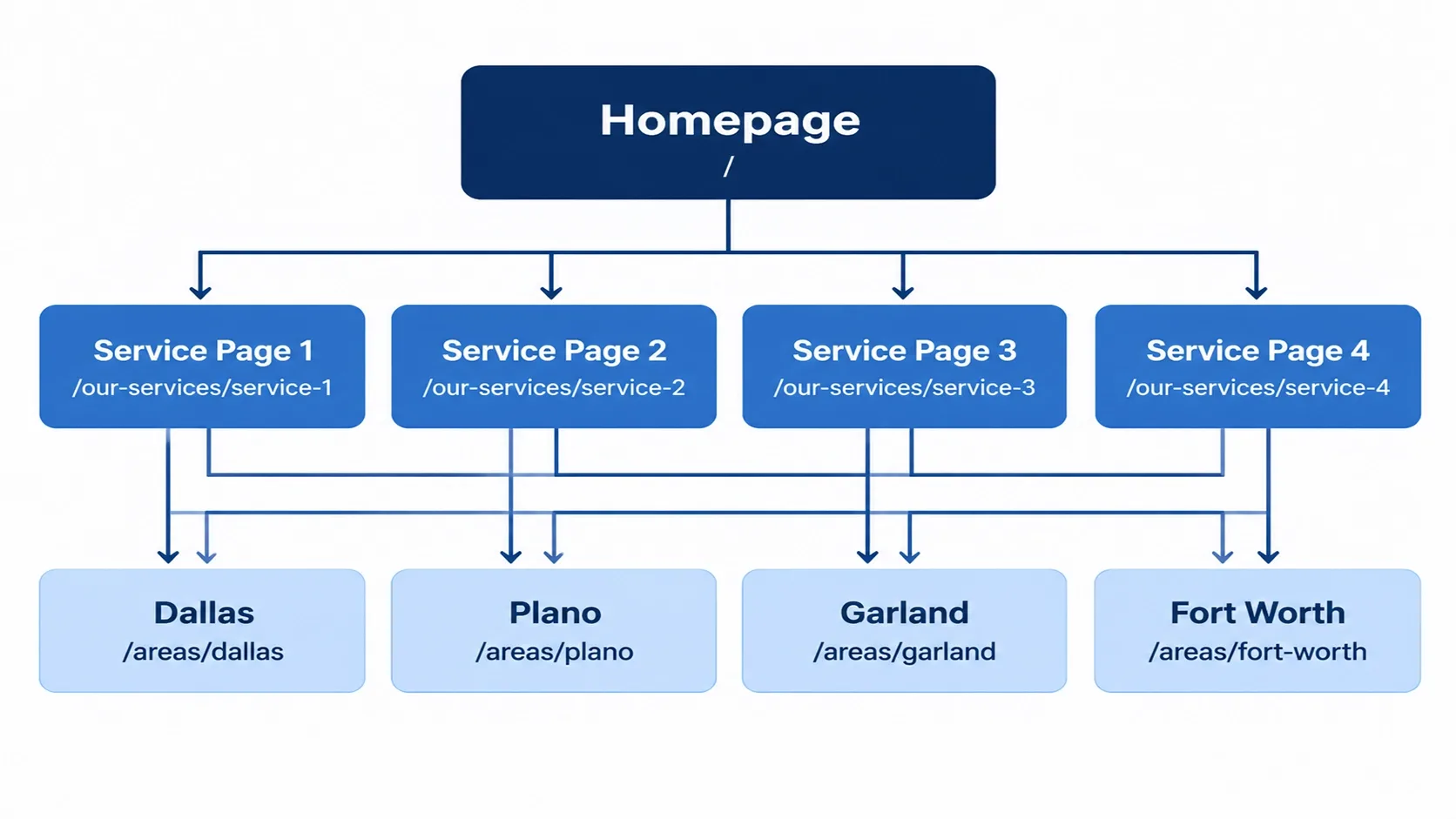
A roofing company in Garland, a dental practice in Plano and an HVAC contractor in Fort Worth all need the same thing: a page for each core service and each area they actually serve, organized so Google and customers understand it instantly. That means planning content hierarchy before design starts.
- Clean URL routing: /services/roof-repair/ and /areas/garland/, not /page-id=482 or five near-duplicate city pages.
- Real localized service pages: each one with unique content, local proof and a clear call to action, built with our local SEO team before launch, not after.
- Internal linking that makes sense: services link to areas, areas link back to services, and nothing important sits four clicks deep.
- A CMS your team can use: WordPress or a headless CMS such as Sanity or Strapi feeding a framework like Next.js, so your office manager can update hours without calling a developer.
A Website That Doesn't Show Up in Dallas Searches Won't Bring You Leads
Vareweb builds service and area pages into the site structure from day one and pairs the build with local SEO, so your new website is ready to be found by customers across DFW.
Headless isn't mandatory at this size. I recommend it when a business needs speed at scale or content that feeds several channels, and I talk clients out of it when a well-built WordPress site would do the job for less.
Timeline matters for budgeting too. A 15-page lead site usually takes 6 to 10 weeks from kickoff to launch, and the longest delays almost always come from waiting on content, photos and approvals, not from development.
And if you already have a site, don't assume you need to start over. I wrote about the signals that actually justify a rebuild in my post on when and why to redesign your website.
3. Custom eCommerce Architecture (The Revenue Machine)
Online stores start around $12,000 with us, and I don't apologize for that number.
A store is software that handles money, customer data and inventory every minute of the day. When it breaks, it doesn't just look bad. It loses orders.
Here's where the hours go on a real eCommerce development project:
- Secure API pipelines: payment gateways, shipping rates, tax calculation, ERP or inventory sync, and email or SMS tools, all talking to each other without dropping data.
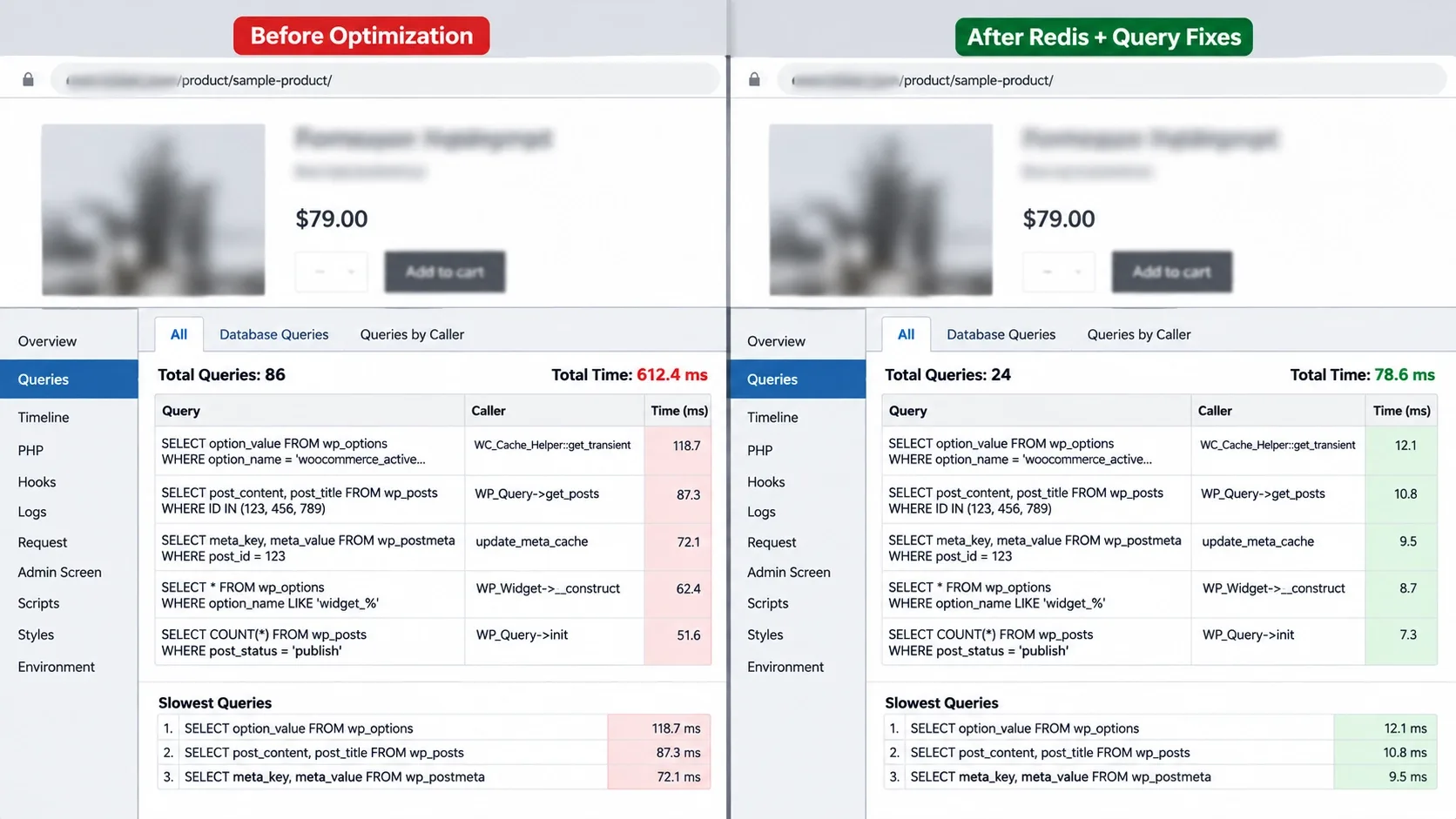
- Database performance: indexed queries, object caching with Redis, and cleanup of the bloat that slows product and checkout pages.
- Checkout work: a fast, trusted checkout, plus extensions such as upsells, delivery dates or B2B pricing that lift average order value.
- Product data and schema: structured product, price and availability data that search engines and AI tools can read.
Payments also bring compliance. Any business taking cards online falls under the PCI Data Security Standard, and the way your checkout is built decides how much of that burden lands on you. Hosted payment fields from Stripe, Shopify Payments or PayPal keep card data off your server, and that's the setup I use for almost every small store.
On Shopify, checkout changes have hard limits depending on your plan, and I walked through what you can and can't change in my guide on how to customize the Shopify checkout page. On WooCommerce, the database is usually the bottleneck, and I broke down the common causes in my post on why your WooCommerce store is so slow.
The theme decision also changes the budget a lot. I compared the trade-offs in free vs premium vs custom Shopify themes, and the cheapest option is rarely the cheapest after year one.
Some brands ask about headless commerce because a competitor has it. I explained when it makes sense, and when it's an expensive detour, in my guide to headless Shopify and whether you really need it.
4. Corporate Sites and Web Apps
Corporate builds and web apps start at $20,000 and climb fast.
These projects add user logins, client portals, dashboards, role-based permissions, multi-location content, single sign-on and integrations with CRMs or internal systems. Each one needs design, development, testing and security review.
I scope these in phases. A Dallas B2B firm rarely needs every feature on launch day, and splitting the build keeps the first invoice sane and the risk lower.
Accessibility belongs in the corporate budget from the start. Building to the WCAG 2.2 guidelines during development costs far less than retrofitting a finished portal after a complaint or a lawsuit demand letter arrives.
But a web app is never "done." Budget for ongoing development the way you'd budget for any other piece of business software.
Need a Portal, Dashboard, or Lead-Generation Site Built Right?
Vareweb handles B2B and enterprise builds with lead-generation architecture, CRM integration, accessibility review, and a phased scope, so you pay for what the business needs now and add the rest later.
5. The Hidden Texas Tax Trap
This is the line item that surprises almost every Dallas client who has only worked with out-of-state freelancers.
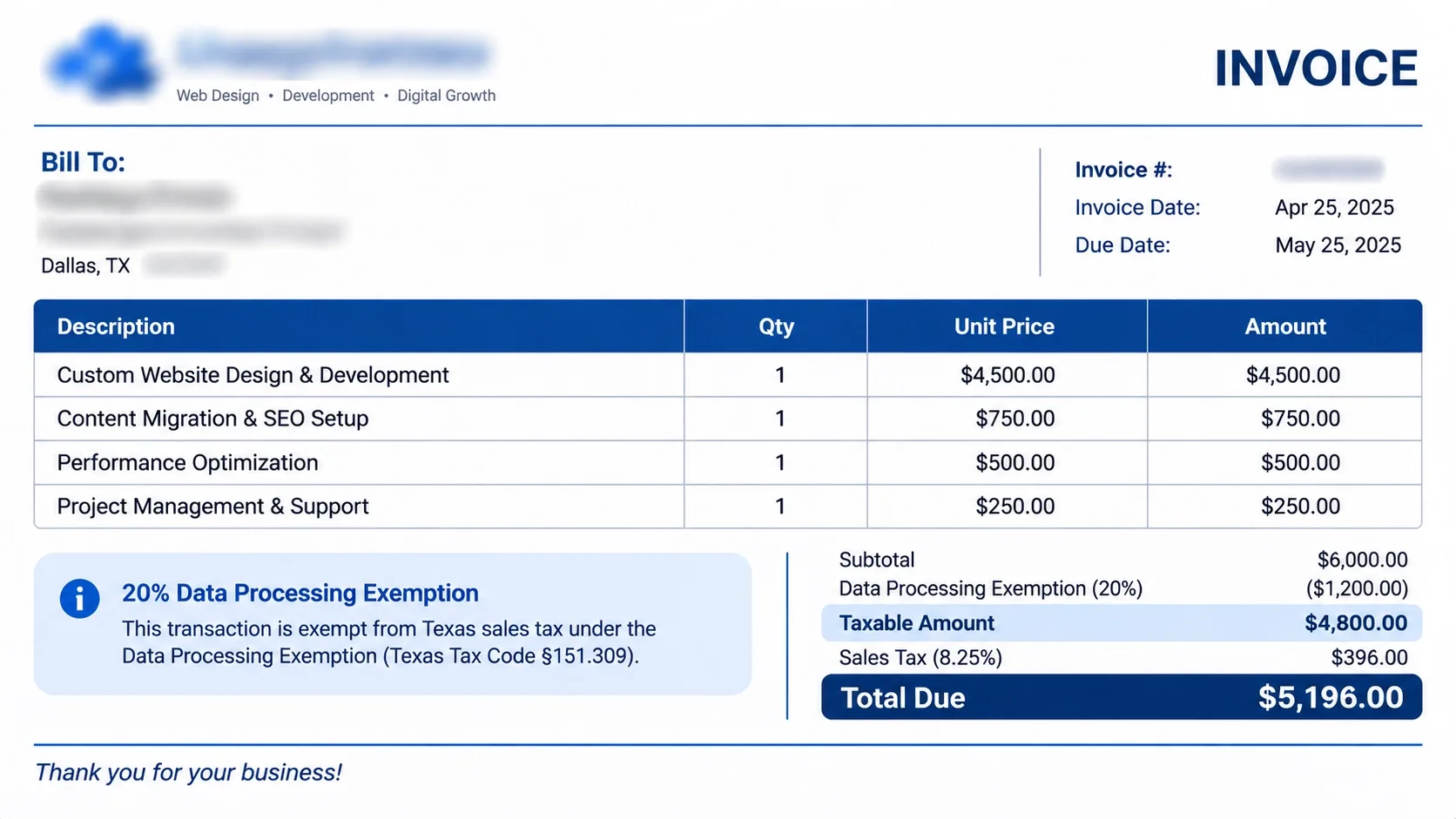
Texas treats website work as a taxable data processing service. The Comptroller's guide to taxable services, updated in January 2026, lists "web hosting, web site creation and maintenance" among its examples of data processing, and states that 20% of the charge for data processing services is exempt from tax.
So tax applies to 80% of the bill. Texas charges a 6.25% state sales tax plus up to 2% local tax, for a maximum combined rate of 8.25%, and Dallas sits at that maximum.
Here's the math on a $10,000 website build in Dallas:
- Taxable portion: 80% of $10,000 = $8,000
- Sales tax at 8.25%: $8,000 x 0.0825 = $660
- Effective rate on the full invoice: about 6.6%
$660 isn't going to sink a project. But if your agency never mentions it, ask why. Either they don't know Texas compliance, or the tax shows up later as an unpleasant surprise.
Hosting and maintenance retainers fall under the same rules, so the tax repeats every year on those too. Your CPA should confirm how it applies to your exact contract, especially if the invoice mixes taxable and non-taxable work.
Quick Comparison: Yearly Website Ownership Costs in Dallas
| Infrastructure item | Yearly cost range | Why you need it |
|---|---|---|
| Domain name (.com) | About $15 to $30 | Your address online; renewal prices rise over time |
| SSL/TLS certificate | $0 to $300 | Encrypts traffic; free certificates work for most sites if renewal is automated |
| Managed cloud hosting | $300 to $1,200 | Isolated resources, fast TTFB, backups and DDoS protection |
| Security and maintenance retainer | $1,200 to $6,000+ | Updates, patches, uptime monitoring and fixes before customers notice |
| Texas sales tax on hosting and maintenance | About 6.6% of those charges | Data processing tax on 80% of the charge |
The Raw Cost of Keeping a Website Online
Launch day isn't the finish line. It's when the meter starts running.
Enterprise Cloud Hosting vs. Cheap Shared Servers
A $3/month shared server puts your business on the same machine as hundreds of other sites. When one of them gets a traffic spike, gets hacked or runs a bad script, your site slows down with it.
You can't fix that with code. You fix it by moving.
Managed cloud platforms such as AWS, Vercel or Kinsta give your site isolated resources, edge caching, automatic backups and protection against DDoS floods. For most small and mid-size Dallas businesses, that lands between $300 and $1,200 a year.
The payoff is TTFB. If the server takes a second to answer, every other optimization starts a second late. Kashaf, our SEO Manager, looks at speed and uptime on one popular hosted setup in his post on whether HighLevel WordPress sites are fast and reliable. Whatever host you pick, measure the server response before you sign the annual plan.
Cheap hosting also hides costs. Backups are often extra, staging environments don't exist, and support means a ticket queue. The first time your site goes down during a Saturday promotion, the $36 a year you saved disappears.
Proactive Maintenance and Security Retainers
Code goes stale. PHP versions reach end of life, plugins ship security fixes, frameworks change their APIs and browsers drop old features.
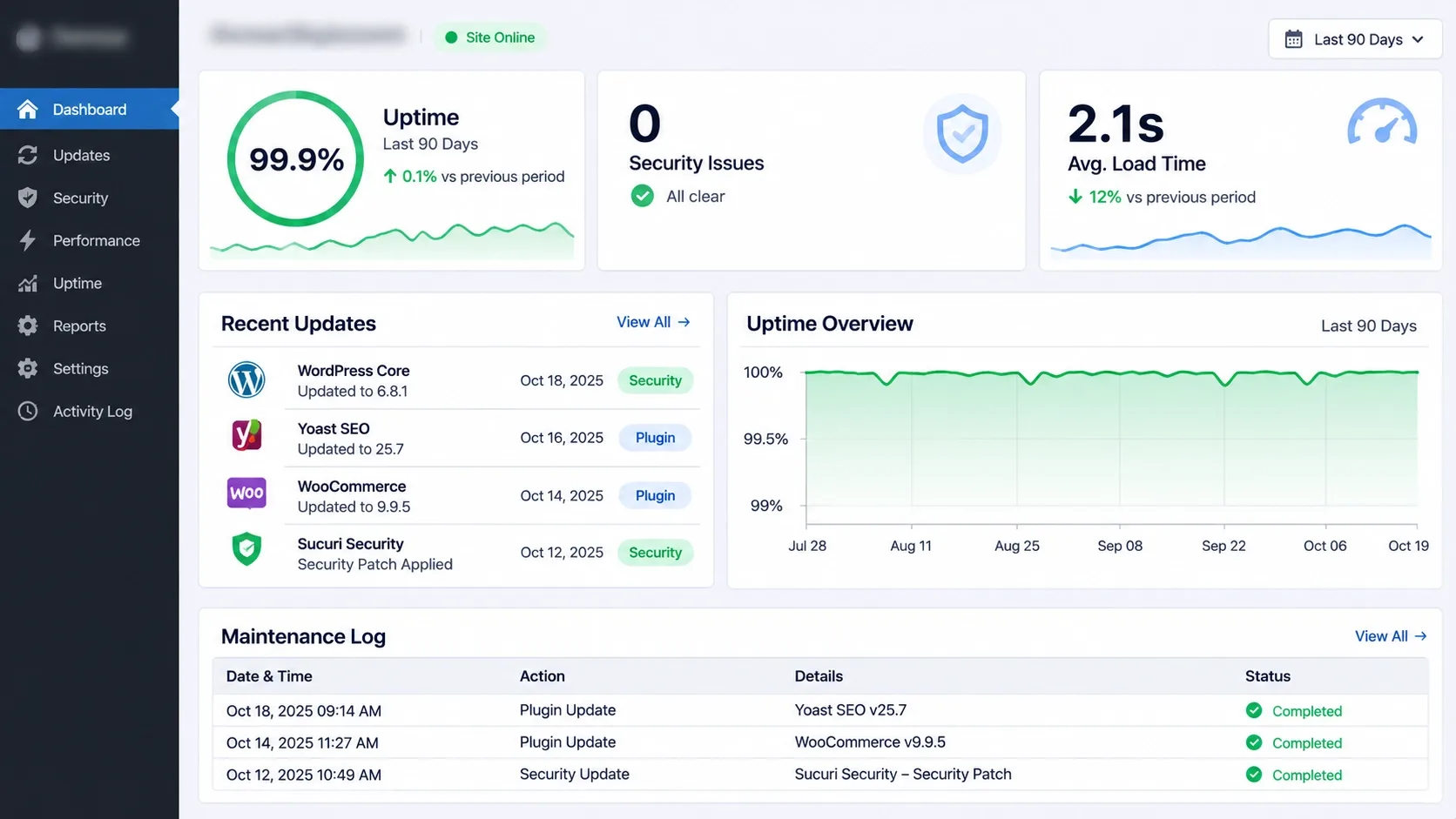
A maintenance retainer of $1,200 to $6,000+ a year isn't a scam. It pays an engineer to do the boring work that keeps your site from getting hijacked:
- Core, plugin and dependency updates, tested on staging before they touch the live site.
- Security patching and malware scanning, with a clear plan for who responds when something breaks at 2 a.m.
- Uptime and performance monitoring, so we hear about a problem before your customers do.
- Off-site backups, tested by actually restoring them, not just trusting the green checkmark.
For stores, the list is longer. I put the full routine in my WooCommerce security checklist, and most of it applies to any WordPress site.
Domains and SSL: Small Costs That Keep Changing
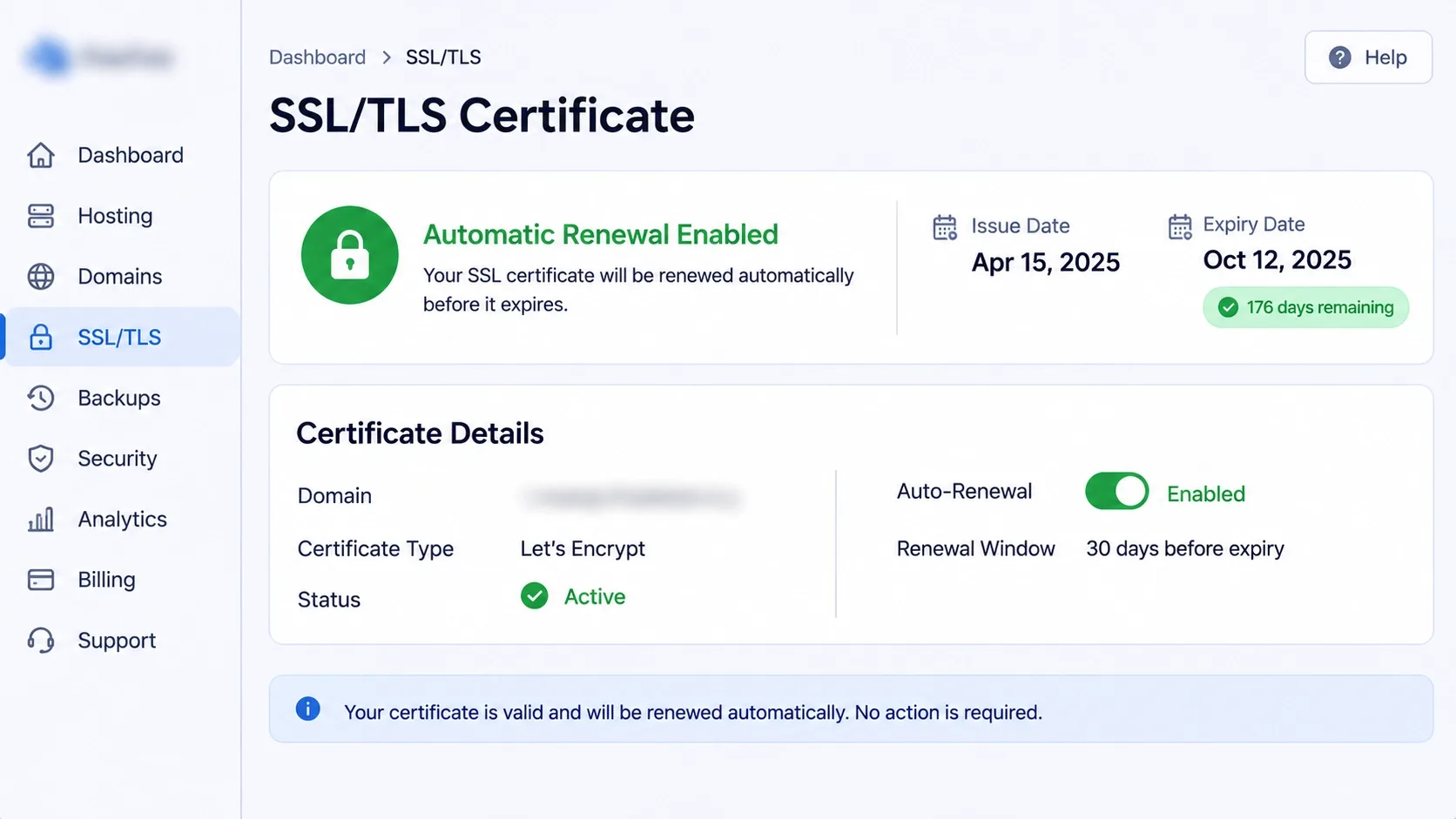
Domains and certificates look like pocket change, but 2026 changed both.
Verisign, which runs the .com registry, announced in its first quarter 2026 results that the wholesale fee for each new and renewed .com name rose from $10.26 to $10.97, effective November 1, 2026. Your registrar adds its own margin on top, so expect renewals to creep up.
Certificates got shorter. Under the CA/Browser Forum baseline requirements, public TLS certificates issued on or after March 15, 2026 can be valid for no more than 200 days. That drops to 100 days in 2027 and 47 days in 2029.
So a "premium SSL" you renew by hand once a year is now a liability. What matters is automated renewal on your hosting, so the certificate never expires on a Friday night and throws a security warning at every visitor.
One more thing: register the domain in your own name, with your own login. I've seen Dallas businesses lose their domain because the agency that set it up went quiet.
What Pushes a Dallas Website Quote Up or Down
Page count is the least interesting part of a quote. These are the variables that move the number most on the projects I scope:
- Content: writing every page from scratch, or editing copy you provide. Professional copywriting can add a few thousand dollars, and it's often worth it.
- Photography: stock photos are cheap but generic. A half-day shoot at your office or job sites costs more and builds far more trust.
- Integrations: each CRM, booking system, payment gateway or inventory tool adds design, development and testing time.
- Custom functionality: quote calculators, member areas, multi-language content and dynamic filters are where budgets jump.
- Migration: moving content, redirects and SEO data from an old site takes careful work, and skipping it can cost rankings for months.
- Revisions and approvals: a clear sign-off process keeps the hours, and the invoice, under control.
If you're replacing an existing site that already ranks, budget for the move properly. Kashaf, our SEO Manager, lays out the process in his guide on how to migrate your website without losing SEO rankings.
Replacing an Old Site? Keep the Rankings You've Already Earned.
Migration scope is the biggest swing factor in any quote. Vareweb handles redesigns with a technical audit, redirect mapping, and launch checks, so your search visibility carries over to the new site.
How to Compare Two Web Design Quotes
When two proposals sit on your desk, the cheaper one isn't automatically the worse deal. It just has to answer the same questions. Ask both agencies:
- Who builds it? Names and roles, and whether any work is subcontracted overseas.
- What are the performance targets? A good agency commits to Core Web Vitals goals on mobile, not just "fast."
- What does year one cost in total? Build, hosting, domain, maintenance and Texas sales tax, in writing.
- Who owns what? Domain, hosting account, code, design files and content should all be yours.
- What happens after launch? Bug fixes, a warranty period and response times when something breaks.
- Is there a staging site? Changes should be tested somewhere other than your live website.
A quote that can't answer those six questions clearly is the expensive one, whatever the number says.
FAQs
Why is there such a big difference in web design quotes in Dallas?
Quotes cover very different amounts of engineering. A $1,000 quote usually means a theme and a few hours, while a $10,000 quote should include custom code, speed work, integrations, testing and launch support.
Does my Dallas business really need a custom website, or is a template fine?
A well-coded template can work for a brand-new business on a tight budget. Once the site needs to generate leads, rank locally or connect to other systems, custom work usually pays for itself.
Are there hidden fees after my website launches?
Yes: hosting, domain renewal, maintenance and Texas sales tax on hosting and maintenance. Ask for a yearly ownership estimate in writing before you sign.
How much does Shopify or WooCommerce eCommerce design cost in DFW?
Most custom store builds in DFW range from about $8,000 to $30,000+. Theme choice, integrations and the number of products drive most of the difference.
Do I have to pay Texas sales tax on web design services?
Yes. Texas treats website creation, maintenance and hosting as data processing, so tax applies to 80% of the charge, up to 8.25% in Dallas.
How long does a $10,000 website take to build?
Usually 6 to 10 weeks. Content delays from the client side are the most common reason projects run longer.
Do I own my website and domain after I pay the agency?
You should, but check the contract. Make sure the domain, hosting account and code are in your name, and that the agreement transfers ownership on final payment.
Ready to Get a Real Number for Your Dallas Website?
Book a free call and Vareweb will walk through your goals, scope the build, and spell out what ownership will cost after launch. Run our answers against the checklist in this guide.

Written by
Minhaj
Minhaj Ahmed is an experienced web and software development professional specializing in web applications, mobile apps, SaaS platforms, and AI-powered solutions. As Head of Development at Vareweb, he brings a strong software engineering background to building scalable digital products and automation systems. He writes about web development, mobile apps, AI, software engineering, and emerging technologies.