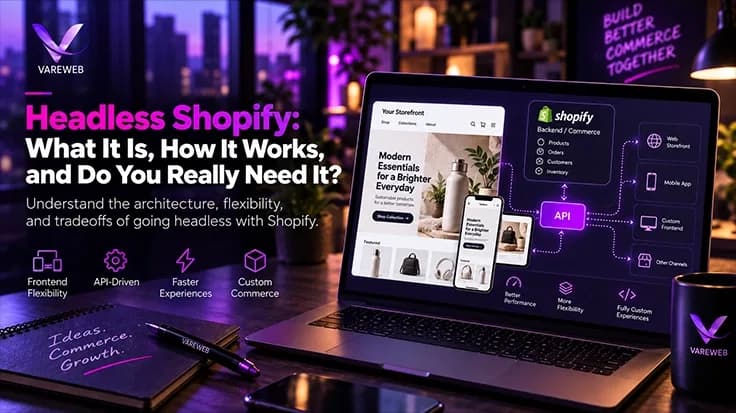
Quick Answer: Headless Shopify is the architectural separation of your frontend customer experience - built with React, Next.js, or Vue - from the Shopify backend handling inventory, checkout, and payments, connected through the Storefront API. It works by rendering pages on edge networks like Vercel, bypassing Shopify's Liquid theme engine entirely. The brutal truth: you probably don't need it unless you're scaling past $10M+ in GMV, require sub-second mobile rendering, or need a genuinely complex omnichannel setup. If you do need it, you need serious engineering to pull it off.
Whenever a founder asks me if they should go headless, the first thing I look at is their server logs and their internal dev resources - in that order. Most of the time, the answer disappoints them. Headless isn't a performance upgrade you buy. It's an engineering commitment you staff for, permanently, and a lot of brands asking the question haven't budgeted for what "permanently" actually means.
Here's what changed the calculus for a lot of teams I talk to: Vercel's own announcement, made jointly with Shopify confirmed that Hydrogen - Shopify's official headless framework - is being rebuilt from the ground up as open-source and runtime-agnostic, finally shipping genuine Next.js support instead of locking teams into Shopify's proprietary Oxygen hosting. At the same event, Vercel's own Ship 2026 recap included a Nordic retailer, Currys/Elkjøp, walking through a Next.js migration that cut time to first byte by 40% - a real, disclosed number, not a vendor projection. This is exactly the kind of complex API orchestration that's why brands hire a headless Shopify development agency rather than relying on generic theme builders to get there.
Quick Comparison: Monolithic Shopify (Liquid) vs. Headless Shopify
| Feature / area | Monolithic Shopify (Liquid) | Headless Shopify Next.js + Storefront API |
|---|---|---|
| Frontend technology | Liquid templates rendered server-side | React/Next.js, fully decoupled from the backend |
| Speed & edge caching | Limited by Shopify's own CDN and theme weight | Full edge caching via Vercel, Netlify, or Cloudflare |
| Content management | Native Shopify page builder | Headless CMS (Sanity, Contentful, Builder.io) |
| URL flexibility | Fixed /products/, /collections/ prefixes | Fully custom routing and URL structure |
| App ecosystem | 1-click installs, thousands of apps | API-based apps only, custom middleware required |
| Checkout | Native, included | Still Shopify-hosted unless on custom Plus API |
| Maintenance cost | Low - one platform, one bill | High - dev team, DevOps, hosting, ongoing updates |
| Time to launch | Days to weeks | Months, with an experienced team |
Headless Is an Engineering Commitment, Not a Performance Upgrade You Buy
Most brands asking whether to go headless haven't budgeted for what "permanently" actually means. Vareweb starts with your server logs and your dev resources, and tells you honestly whether a well-built Liquid theme would get you there first.
Headless Shopify: What It Is, How It Works, and Do You Really Need It?
1. What Exactly Is Headless Shopify?
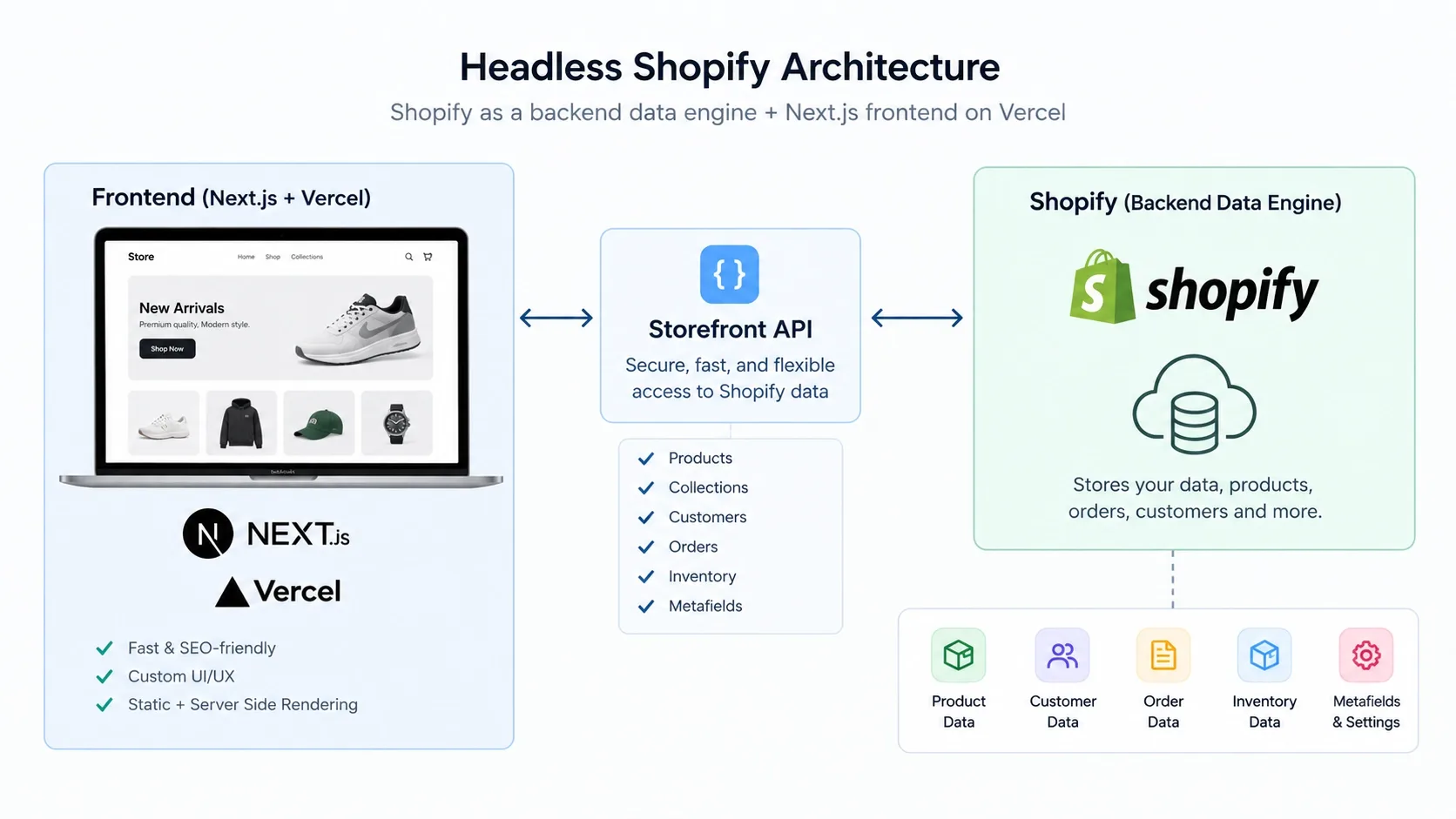
Strip away the marketing language and headless is a physical separation: the "body" - inventory, checkout, payments, order management - stays on Shopify, while the "head" - everything a customer actually sees and clicks - gets built and hosted somewhere else entirely, usually React or Next.js on an edge network.
Shopify becomes a pure data engine at that point. It still runs your product catalog, your checkout, your order pipeline - but it never renders a single pixel of what a customer sees. That job belongs entirely to your frontend framework now, which is either liberating or terrifying depending on how much your team actually knows about shipping and maintaining a production React application.
In my experience leading the dev team at Vareweb, decoupling the frontend solves a lot of problems - and introduces a whole new set of DevOps headaches nobody mentions in the pitch deck. You're no longer deploying one theme file. You're deploying, versioning, and monitoring an entire application, separately from the commerce backend it depends on.
2. The Storefront API: The Engine Powering Your Custom Frontend
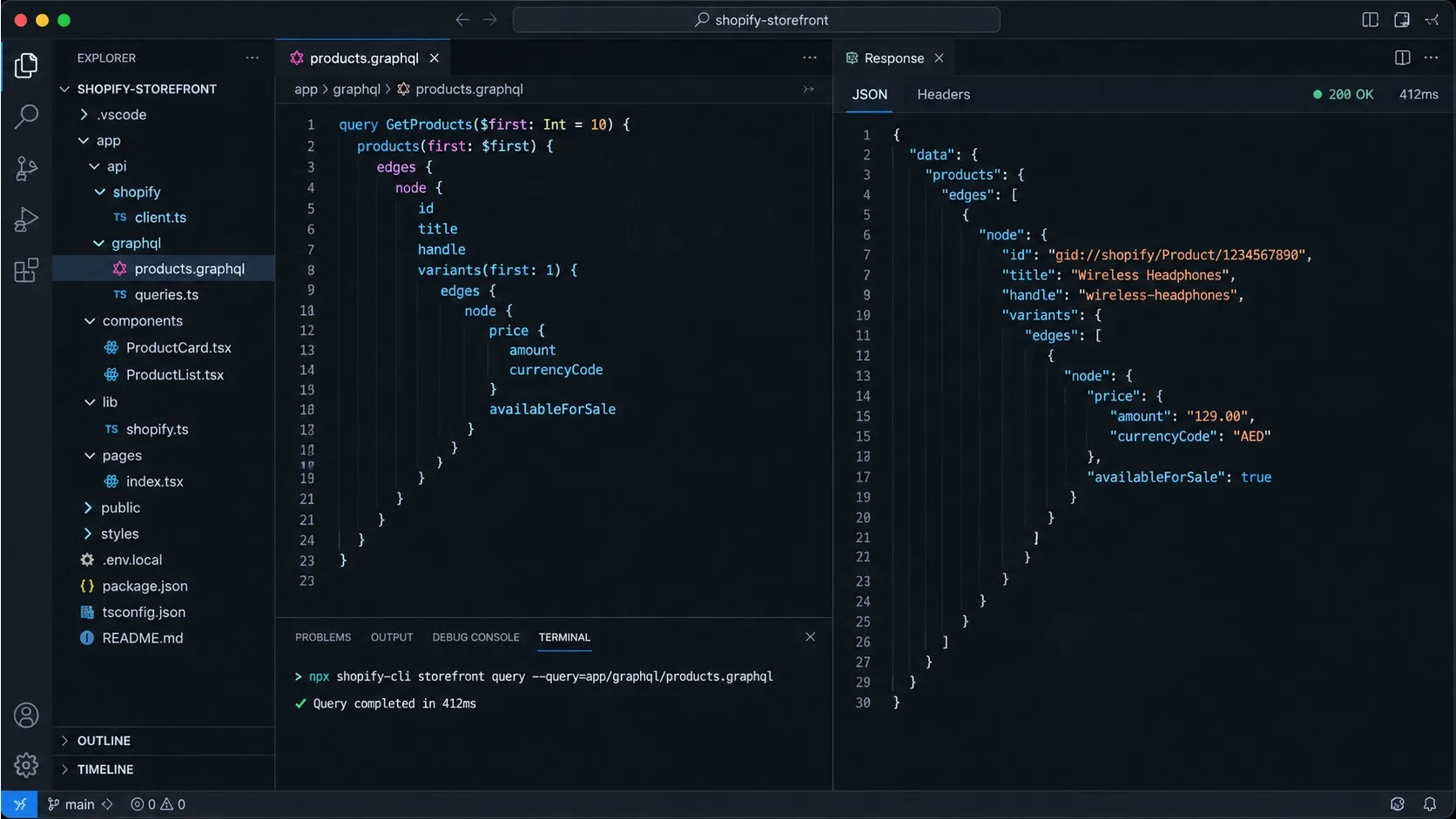
Shopify's GraphQL Storefront API is what makes any of this possible - a structured, queryable layer that hands your frontend exactly the product, cart, and customer data it asks for, nothing more, in milliseconds, without touching a single line of Liquid.
Queries fetch product data; mutations handle cart operations - adding a line item, updating a quantity, applying a discount code. Cart IDs get generated and persisted client-side, and every one of those operations has to be wired by hand, because none of Shopify's native cart UI exists in a headless build. You're building what Liquid themes give you for free. Shopify's own developer changelog confirmed on June 30, 2026 that Hydrogen now one-click deploys to Vercel with the Storefront API client, cart, and product templates already wired - a genuine head start on exactly this wiring work, if you're starting fresh.
3. Monolithic Liquid vs. React/Next.js: The Performance Gap
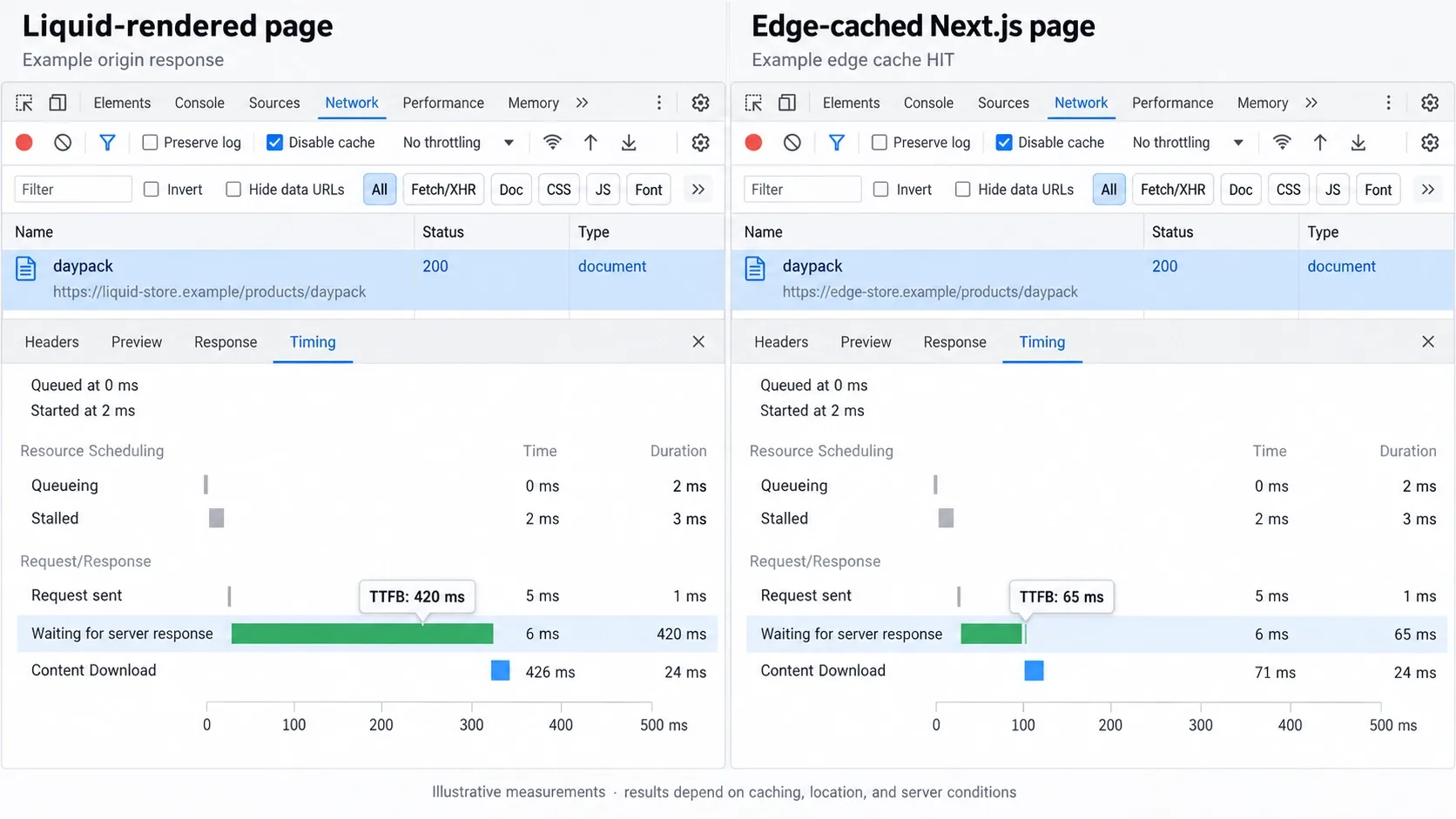
Liquid's bottleneck isn't the templating language itself - it's everything merchants bolt on top of it. Server-side rendering on a shared theme architecture, plus a dozen app scripts each injecting their own JavaScript, adds up to exactly the kind of render-blocking mess that caps how fast a monolithic store can ever load, regardless of how clean the base theme was.
Next.js attacks this from a different angle entirely - Static Site Generation for pages that don't change often, Server-Side Rendering for genuinely dynamic ones, and edge caching that serves pre-rendered HTML from a location physically close to the shopper instead of round-tripping to Shopify's servers on every request. The Currys/Elkjøp example from Vercel's own Ship 2026 recap - a 40% time-to-first-byte reduction from a Next.js migration - is the real-world shape of what this architectural difference actually buys you.
4. Do You Actually Need Headless? The $10M+ GMV Rule
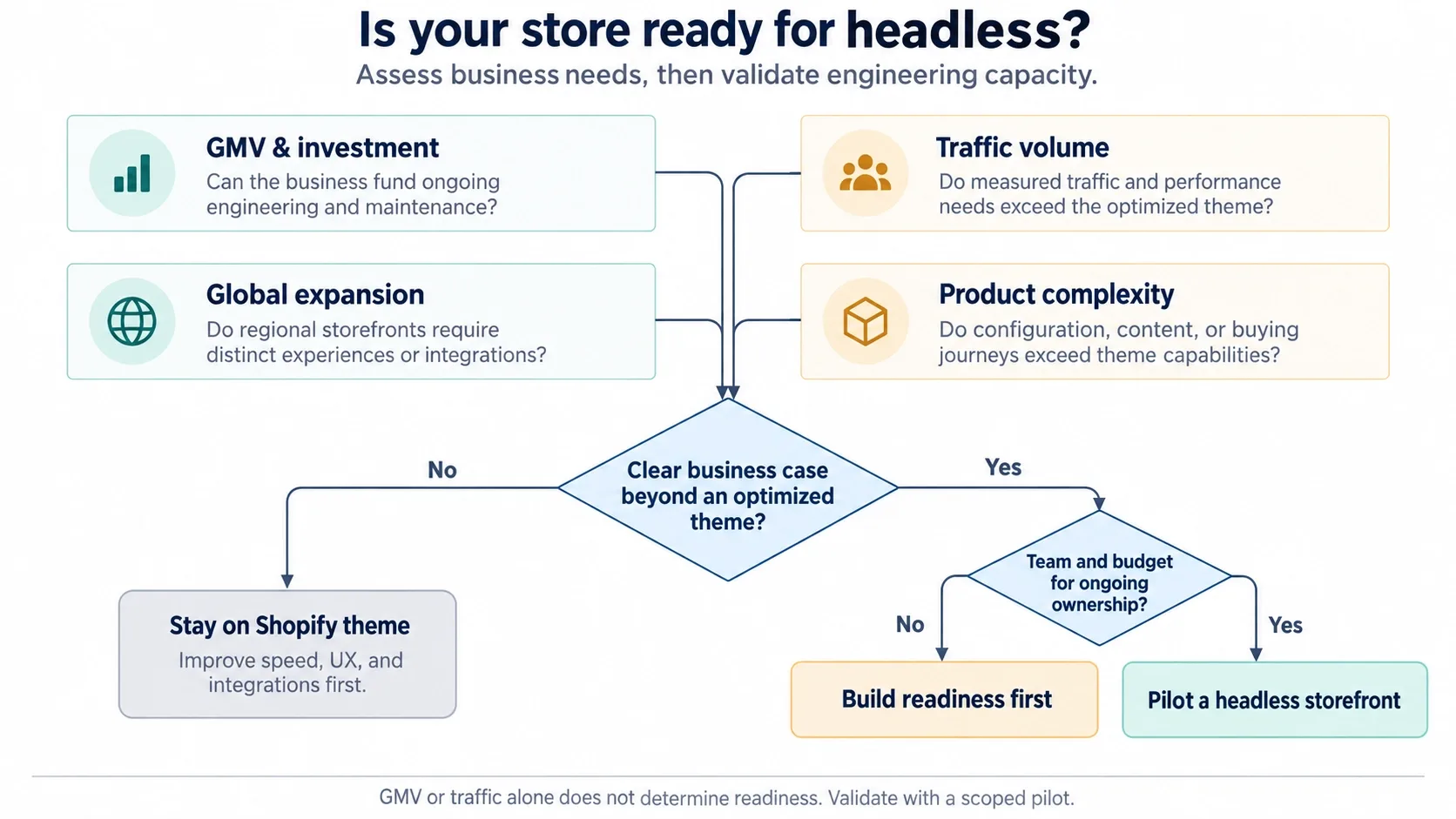
I'll be radically honest about this, because most of the content on this topic won't be: if you're doing $1M a year, headless will bankrupt your margin in maintenance costs alone, long before it pays for itself in conversion lift.
Here's the actual criteria I use to qualify a brand at Vareweb: sustained traffic volume that genuinely stresses a monolithic theme, real global or multi-region expansion with localized pricing needs, product logic too complex for native Shopify to express cleanly, or a sub-second mobile rendering requirement that a well-built Liquid theme genuinely can't hit. Two of those, maybe. One alone, rarely. None of them, and you need a better Liquid developer, not a headless migration.
5. Integrating a Headless CMS
Shopify's native page builder stops being usable the moment you go headless - there's no Liquid template left for it to edit. Marketing teams that relied on it lose that control entirely unless you deliberately replace it with something else.
We map Shopify product data into a headless CMS - Sanity, Contentful, or Builder.io, depending on the team's technical comfort - giving marketing component-based, no-code publishing power again without anyone touching the React codebase. Get this step wrong and you've traded a bad problem (slow theme) for a worse one (a marketing team that can't ship a landing page without a developer).
6. Overcoming Shopify's Rigid URL Structure
Shopify forces /products/ and /collections/ as permanent prefixes on the native platform - a constraint Kashaf, our SEO Manager, examines in depth in how to get Shopify to rank for competitive keywords for merchants who stay on Liquid.
Going headless removes that constraint entirely. A Next.js frontend can implement completely custom routing - flat URLs, localized paths like /mens/shoes/sneakers, whatever structure actually serves the catalog - because the frontend answers every request itself instead of inheriting Shopify's native router. That flexibility is real. It's also one more system you now own and have to maintain correctly, including the canonical and redirect logic Shopify used to handle for you.
Custom URLs Are Freedom You Now Have to Maintain Yourself
Headless removes Shopify's fixed URL prefixes, and with them the canonical and redirect logic the platform used to handle automatically. Vareweb engineers that routing layer deliberately, before a single page goes live.
7. How Headless Solves Internationalization and Multi-Currency
Native Shopify Markets works, but it works within real limits - localized pricing, language switching, and market-specific inventory all route through Shopify's own logic, which means you're constrained to what that logic supports.
A headless frontend renders localized pricing, language, and market-specific inventory dynamically, pulling from whatever source of truth you configure rather than being boxed into Shopify Markets' native behavior or a heavy third-party translation app layered on top. For a brand genuinely operating across a dozen markets with real pricing differences, this is one of headless's strongest, least-debatable arguments.
8. Engineering SEO, JSON-LD, and Dynamic Sitemaps from Scratch
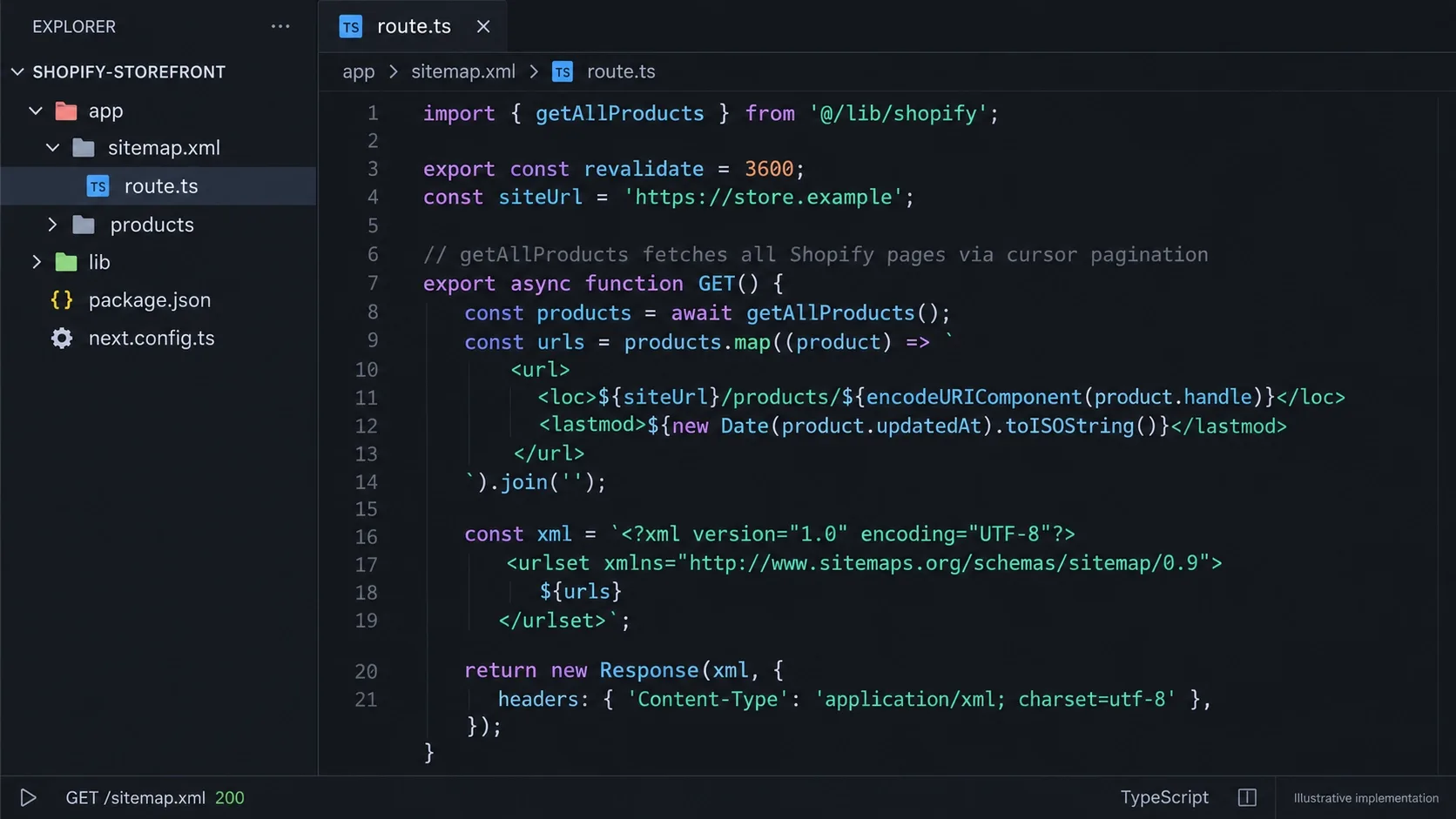
This is the single biggest risk in a headless migration, and it's the one I see go wrong most often. Shopify's native theme engine handles canonical tags, basic schema, and sitemap generation automatically. None of that exists by default in a custom Next.js build - you're responsible for every piece of it.
I engineer next-seo configuration, inject nested JSON-LD dynamically per product and collection, and build automated XML sitemap generation that actually keeps pace with inventory changes, before a single page goes live on the new frontend. Skip this step and a headless migration doesn't just underperform - it can actively tank rankings the business spent years earning. Kashaf, our SEO Manager, breaks down how schema markup and web design work together, and on the engineering side, getting the sitemap regeneration genuinely automated - not a cron job someone forgets about - is what actually prevents the damage.
9. The App Ecosystem Reality: Say Goodbye to 1-Click Installs
Standard Shopify apps - reviews, pop-ups, loyalty programs - rely on injecting Liquid snippets directly into theme files. That entire mechanism doesn't exist in a headless build, because there's no Liquid template left for an app to inject into.
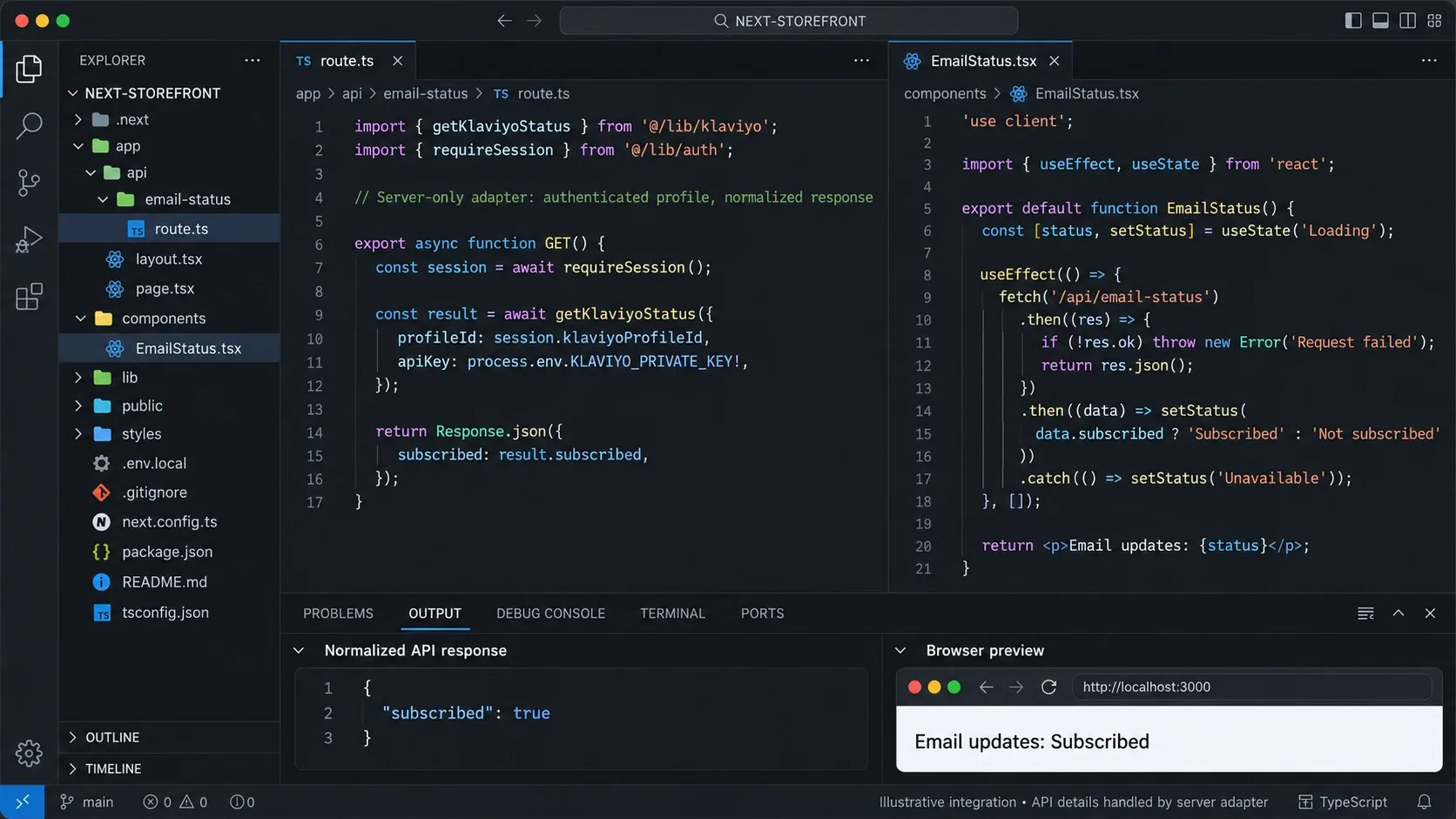
Headless requires apps with genuinely robust APIs - Yotpo, Klaviyo, Algolia are the ones that actually hold up - and even then, you're writing custom middleware to wire their data into your frontend rather than toggling an app on. Budget real engineering time for every app a merchant assumed would just work.
10. Omnichannel Commerce: Beyond the Web
Headless isn't a web-only architecture decision, and this is the part most merchants evaluating it never consider. The same Storefront API endpoints powering your Next.js frontend can power a native iOS app, an in-store smart mirror, or a wearable device, all reading from one central Shopify backend.
That's the genuine omnichannel case for headless - not "it looks nicer," but "the same product and inventory data now has one canonical source feeding every surface a customer might touch," web included but not web-exclusive.
11. Handling Checkout: The One Thing That Stays on Shopify
Here's a major misconception I correct constantly: going headless does not mean building a custom checkout. Unless you're on Shopify Plus with access to the custom checkout API, checkout stays exactly where it's always been.
We securely hand off the cart payload from the React frontend to Shopify's native checkout domain - checkout.yourbrand.com - at the moment a customer clicks buy. PCI compliance, fraud detection, and payment processing all stay Shopify's problem, which is honestly the correct call for the overwhelming majority of merchants, headless or not.
Checkout Staying on Shopify Is Good News. The Rest of the Stack Is Still Your Problem.
PCI compliance and payment processing stay Shopify's job - everything upstream of the cart does not. Vareweb scopes the real engineering and DevOps commitment before you sign anything, so the build quote is never the only number you see.
12. The Hidden Costs: Development, DevOps, and Hosting Bills
Be honest with yourself about total cost of ownership before signing anything. The agency build cost is real money, but it's the visible number - the ongoing DevOps retainer, the Vercel or AWS hosting bill that scales with traffic, and the dedicated dev resource you need permanently, not just for launch, are the costs that actually determine whether headless was worth it two years in.
A Liquid theme costs one Shopify subscription. A headless build costs that subscription plus a development team's ongoing attention, indefinitely - and the brands that regret going headless almost always underestimated this specific line item, not the initial build quote.
13. Transitioning from Liquid to Headless: The Phased Rollout
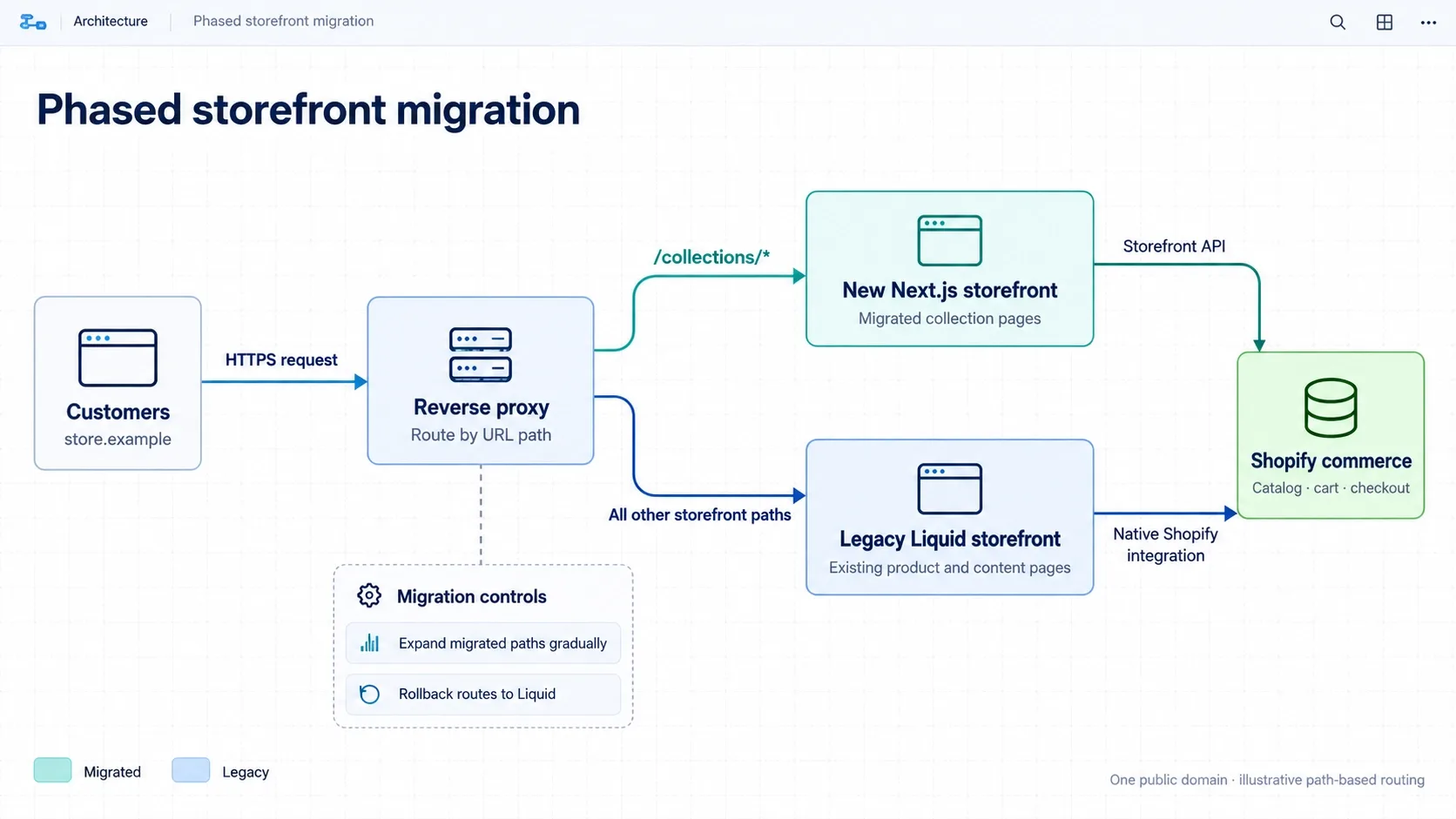
Flipping an entire storefront to headless in one deployment is how migrations fail publicly, with real revenue on the line while the team debugs in production. We don't do full cutovers.
Migrate incrementally instead - a headless blog, or a handful of headless collection pages, fronted by a reverse proxy that routes traffic between the old Liquid theme and the new headless build by path. Prove the architecture works on lower-stakes pages first, catch the SEO and performance issues while they're still cheap to fix, and only flip the switch on checkout-adjacent pages once everything upstream has been stable for a real stretch of time.
14. Future-Proofing for AI: Building API Endpoints for Answer Engines
Headless architecture puts you in a genuinely stronger position for Generative Engine Optimization than a Liquid theme does, because you already control exactly what data gets exposed, in what format, at what endpoint - there's no theme boilerplate to fight against.
I structure dedicated content APIs and serve a real llms.txt file so Perplexity, ChatGPT, and Google AI Overviews can parse a product catalog without executing a single line of client-side JavaScript first. I went deeper on the broader design-and-AI intersection in my earlier piece on where AI fits in the web design process, and on the Shopify-specific citation mechanics - the schema structure, the catalog feed requirements - Kashaf, our SEO Manager, has the technical breakdown on optimizing your Shopify store for AI Overviews. My job is making sure the API endpoints exist cleanly enough for his GEO strategy to actually work against.
Ready to Build a Headless Store That Actually Holds Up?
Vareweb's development team engineers the Storefront API layer, the SEO foundation, and the phased rollout together - so the move to headless is a controlled upgrade, not a public experiment with your revenue. One team, accountable for the whole result.
FAQs
Is Headless Shopify faster than a highly optimized Liquid theme?
Usually, but not automatically - a genuinely well-optimized Liquid theme can beat a poorly built headless frontend. The ceiling is higher on headless, but you have to actually build to hit it; the architecture alone doesn't guarantee the speed.
How much does a Headless Shopify migration typically cost?
It varies enormously by catalog complexity and integration count, but budget for a serious agency engagement plus ongoing monthly DevOps and hosting costs that continue indefinitely, not a one-time project fee.
Can my marketing team still edit pages without coding in a headless setup?
Yes, if you've integrated a genuine headless CMS like Sanity or Contentful with component-based editing. No, if you skipped that step assuming Shopify's native page builder would still work - it won't.
Do I need Shopify Plus to go headless?
Not strictly, but Plus gives you meaningfully higher Storefront API rate limits, which matters once a headless frontend is making significant API calls per minute under real traffic.
What happens to my existing Shopify apps if we migrate to headless?
Most break immediately, since standard apps inject through Liquid. Apps with genuine APIs can be rebuilt into your headless frontend with custom middleware; everything else needs a true replacement, not a workaround.
Will my SEO drop during a headless migration?
It can, badly, if canonical tags, schema, and sitemap generation aren't engineered before launch - these are native to Liquid and nonexistent by default in a custom build. Done right, with redirects mapped and structured data in place before cutover, SEO can hold steady or improve.
What are the best frontend frameworks for Headless Shopify?
Next.js is the dominant choice for genuine production builds, with Shopify's own Hydrogen framework - now rebuilt to be runtime-agnostic - also directly supporting it alongside Nuxt and SvelteKit.
How do we handle site search in a headless architecture?
Native Shopify search doesn't exist in a headless frontend, so you integrate a dedicated solution - Algolia is the common production choice - wired into your frontend through its own API, with its own indexing and relevance tuning to configure from scratch.

Written by
Minhaj
Minhaj Ahmed is an experienced web and software development professional specializing in web applications, mobile apps, SaaS platforms, and AI-powered solutions. As Head of Development at Vareweb, he brings a strong software engineering background to building scalable digital products and automation systems. He writes about web development, mobile apps, AI, software engineering, and emerging technologies.