Quick Answer: You choose a legitimate SEO company by auditing its business sense, technical transparency and revenue tracking, not by trusting guaranteed ranking dates or a cheap monthly retainer. Walk away from any agency that sells SEO as a fixed package of blog posts and backlinks, and hire the one that works like a fractional growth team: custom schema, site architecture and non-branded revenue.
Every bad SEO engagement I've cleaned up started with a good sales call.
The pitch deck looked sharp. The account manager spoke fluent growth, the case studies glowed, and the monthly price fit the budget. Six months later the founder owned a pile of reports and a site that ranked for nothing that sold.
Google tells you what to watch for if you read its own guidance. Its page on whether you need an SEO and how to hire one, last updated June 5, 2026, says "No one can guarantee a #1 ranking on Google" and tells you to find someone else if a company promises first place.
Most founders never read that page. Agencies count on it.
I'm writing this as the person who inherits the wreckage: the redirect chains, the thin posts, the link reports nobody can explain. Use the framework below on your next proposal, and you'll spot a weak agency in one meeting.
Judge an SEO Agency by What It Shows You Before You Sign
Vareweb starts every engagement with a technical and competitive audit, so you see what's wrong with your site, and what it would take to fix it, before you commit to anything.
Quick Overview: Scam Agency vs. Legitimate SEO Partner
| What to check | The scam agency | The legitimate partner |
|---|---|---|
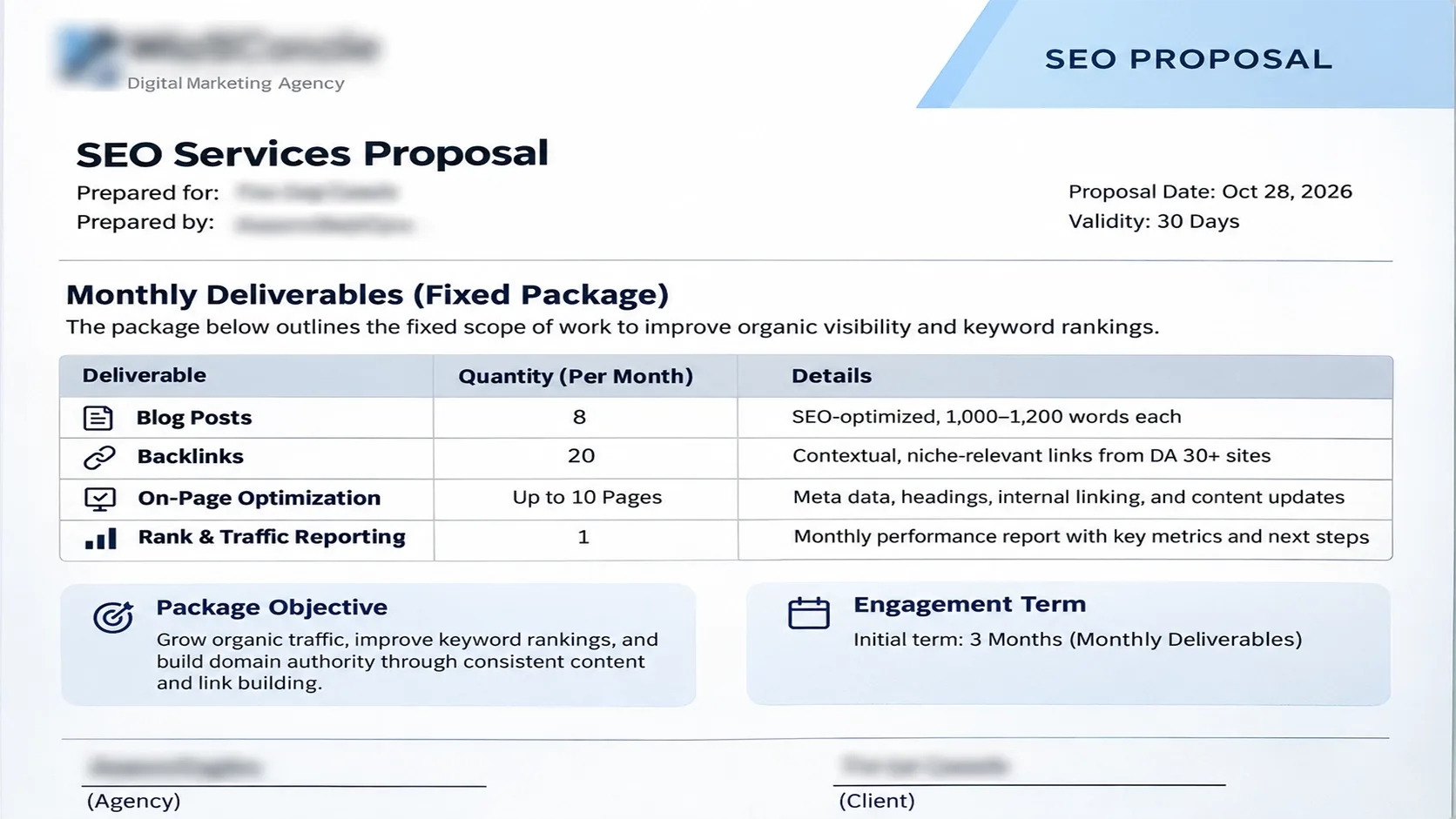
| Packages | Sells a fixed bundle, such as 4 blogs and 10 links a month | Scopes work from your audit, competitors and revenue goals |
| Content | Generic posts published to hit a quota | Pages mapped to the buyer journey, plus updates to decaying content |
| Backlinks | Monthly spreadsheet of low-quality links, private networks and directories | Few contextual links from real publishers that you approve first |
| Reporting | Impressions, traffic spikes and rankings for keywords nobody buys with | Non-branded conversions, revenue and assisted sales from GA4 and your CRM |
| Technical and AI readiness | Installs a plugin and edits meta descriptions | Fixes crawl paths, canonicals, speed and schema, and plans for AI search |
| Guarantees | Promises page one in 30 to 90 days | Forecasts from data and works on a 6-to-12-month horizon |
| Access and exit | Holds your accounts and assets, locks you into a long contract | Uses your accounts, documents everything and lets you leave cleanly |

The Commodity Trap: Why Buying "SEO Packages" is a Scam
Agencies love packages because packages scale. One writer, one outsourced link vendor and one report template can serve fifty clients, and nobody has to learn your business.
When a founder brings me an SEO proposal, the first red flag I look for is a deliverables list that never mentions a revenue target. "4 blogs and 10 backlinks a month" describes activity. It tells you nothing about whether a single buyer will find you.
The economics explain why. A package priced for volume leaves no room for senior thinking, so the work goes to the cheapest hands and the output follows the cheapest path: short posts, bought links and recycled reports.
Agencies sell spreadsheets of links. A legitimate growth partner builds a compounding revenue engine.
The packages also run against a Google that keeps tightening. Its Search Status Dashboard lists four spam updates and two core updates in 2026: spam updates on March 24, June 24, August 18 and September 24, and core updates starting March 27 and May 21. Tactics that look safe in January can hurt you by autumn.
The damage compounds in the site itself. I regularly inherit stores that a cheap agency stuffed with heavy plugins, thin landing pages and broken redirect chains, and the fix sometimes means a full rebuild through our eCommerce web development services just to make the site crawlable again.
Price tells you little, but it does tell you something. I broke down what real work costs and what each tier should include in my guide to how much ecommerce SEO costs and what to expect, so you can sanity-check any quote against actual scope.
Here's the operational reality that most agencies hide behind NDAs: the person who sold you the contract rarely does the work, and the person who does the work rarely knows your margins.
A real proposal reads differently. It starts from your numbers and your competitors instead of a menu of deliverables.
- Audit findings with evidence: screenshots, URLs and crawl data that show what's wrong on your site today.
- Named people and hours: who works on your account, what they cost and how many hours you buy.
- A ninety-day plan: the first fixes ranked by revenue impact, with owners on both sides.
- A measurement plan: the exact revenue and conversion metrics, and where the data comes from.
- Assumptions and risks: what could slow the work, such as developer capacity, a platform limit or slow approvals.
Got an SEO Proposal on Your Desk? Get a Second Opinion.
Send us the proposal you've been quoted and we'll tell you what you're actually paying for, and what's missing.
Check the contract as hard as the proposal. A long lock-in paired with an up-front fee shifts every risk onto you.
Fix that before you sign. The five pillars below show you how.
The Vetting Framework: How to Choose an SEO Company
1. Exposing the "Monthly Blog Quota" Trap
The agency scam. The agency promises four SEO blog posts a month so you can see steady output. The calendar looks busy, and the invoice always matches.
The reality. A 500-word article written to a quota, often spun by AI, adds no information the search results don't already have. Google's spam policies call out scaled content abuse: many pages generated mainly to manipulate rankings, including generative AI output that adds no value for users. Sites that cross that line can rank lower or drop out of results.
Agencies like to say these posts "waste crawl budget." Be careful with that claim. Google's crawl budget guide is aimed at sites with roughly a million or more pages, or 10,000 or more pages that change daily, so most stores will never hit that wall.
The real damage is quieter. Thin posts dilute topical focus, compete with your money pages for the same queries and push the pages that earn revenue further down.
I covered how that dilution shows up in a store's index in my guide to common WooCommerce SEO issues and how to fix them.
What to look for. Ask which buyer question each page answers, and which existing page it replaces or supports. A serious agency builds deep pillar pages, refreshes decaying content and kills pages that never earned a click.
Test it yourself in ten minutes. Open the agency's own blog and the blogs of two clients, and read the last ten posts. Ask whether any sentence in them required someone to have done the work, or whether the posts just rephrase the first page of search results.
- A content map before writing starts: topic, search intent, target page, and the information the page adds that competitors lack.
- Named expertise: an author, a customer, an engineer or an owner who has done the thing the page describes.
- A refresh and prune plan: quarterly decisions to update, merge or delete.
2. The Truth About Backlink Spreadsheets
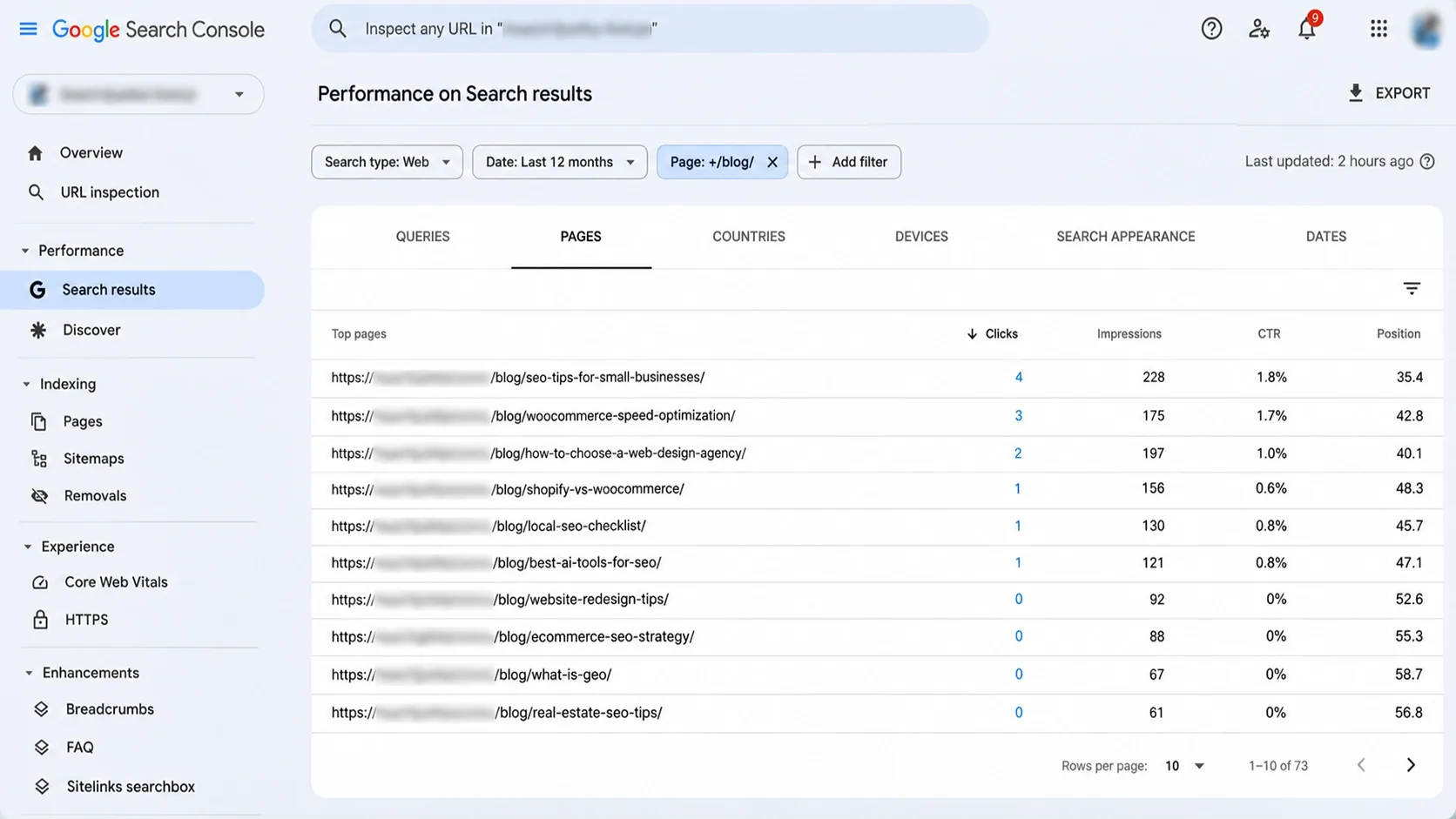
The agency scam. Each month you get a report with 50 new backlinks and a green arrow. Nobody tells you where the links live.
The reality. Cheap agencies buy links from link farms, private blog networks and low-tier directories. Google's spam policies define link spam as links created mainly to manipulate rankings, including paid links without a rel="sponsored" or rel="nofollow" tag, excessive link exchanges, and links from automated programs.
The Wikipedia entry on a link farm describes the pattern: a group of sites that link to each other to inflate rankings. I've opened client backlink reports that listed nothing else.
One more line from Google's hiring guidance: you should never have to link to an SEO. If a contract includes a footer credit on your site, that's a signal about the agency's priorities.
What to look for. Full link transparency. A real agency earns contextual placements on vetted industry publications through digital PR and manual outreach, and it shows you every target before it pitches.
Open the report and check ten linking sites by hand. Look for real traffic, real articles on a topic near yours, and an editor who plausibly chose to link. A site that also links to casino pages and cheap pills tells you everything.
- Two strong links beat fifty weak ones: ask for a quality bar, not a quota.
- Approval rights: you sign off on each publication before outreach begins.
- Live URLs, not screenshots: every placement comes with the page address, anchor text and date.
- Your own audit: crawl and check the referring domains yourself, or ask an independent consultant to do it.
3. Vanity Metrics vs. Revenue Tracking
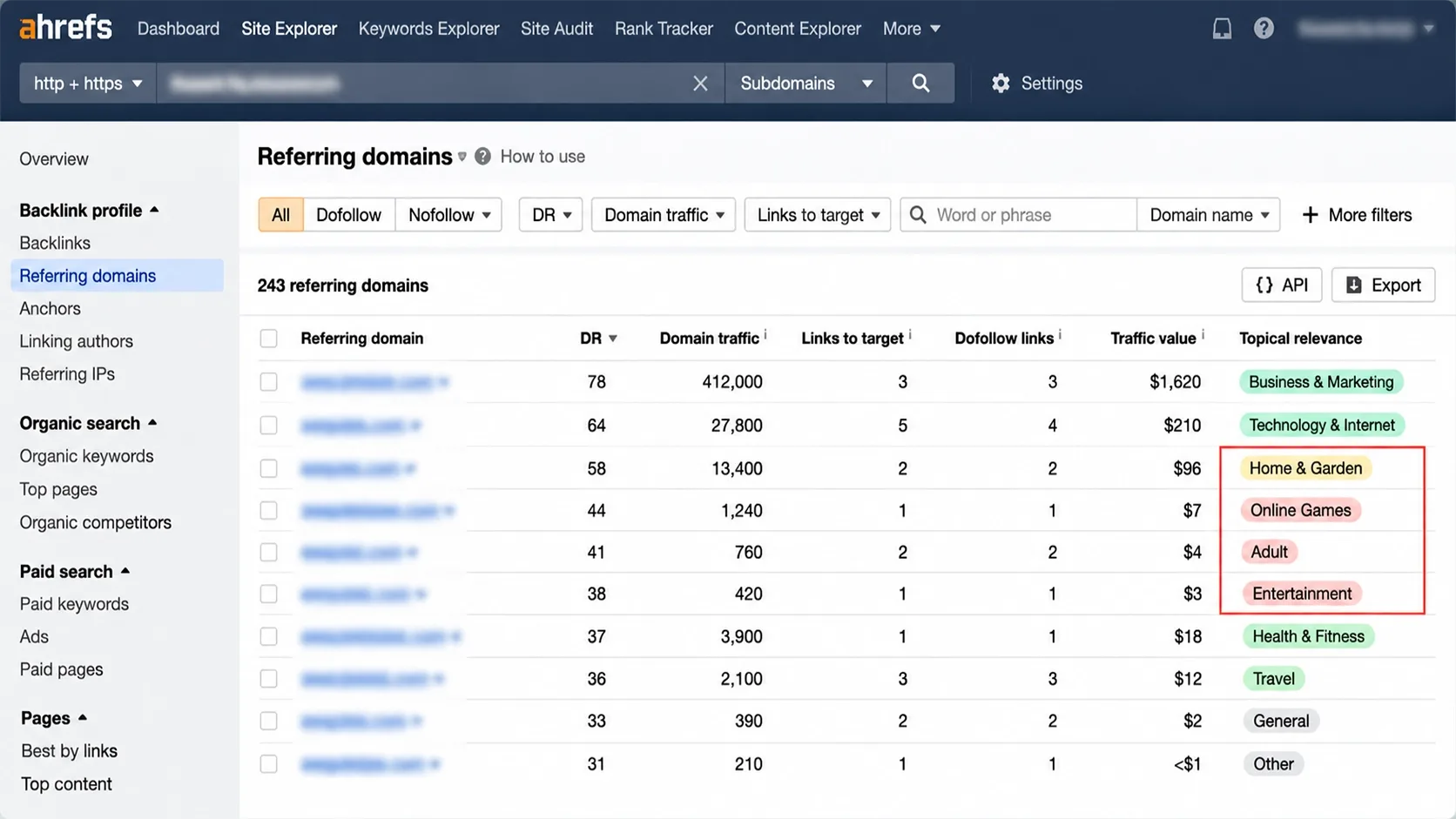
The agency scam. The report leads with total impressions, a traffic spike or a first-place ranking for a keyword nobody searches. Every chart points up.
The reality. Traffic without commercial intent is a liability. It inflates reports, and impressions don't fund payroll.
Search behavior makes this worse every quarter. SparkToro's analysis of Similarweb clickstream data found that 68.01% of U.S. Google searches ended without a click in January to April 2026, up from 60.45% in 2024. More visibility now comes without a visit, so an impressions chart can climb while your sales stay flat.
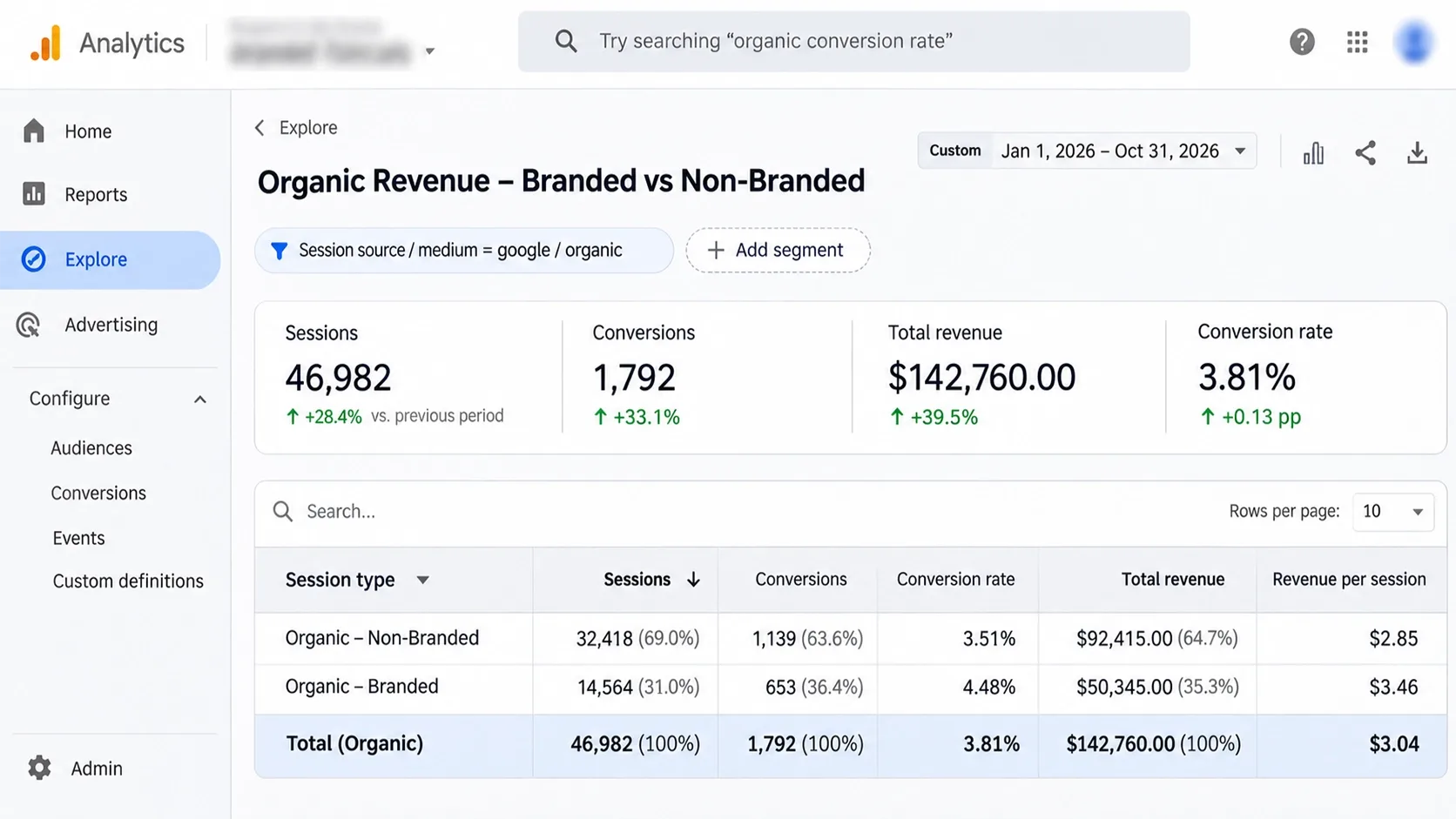
What to look for. Reporting that starts from revenue and works backward. Your agency should track non-branded organic conversions, average order value and assisted revenue, and it should tie them to your CRM so a lead counts only when it becomes a customer.
- Set up purchase tracking: the GA4 ecommerce purchases report shows revenue by item, and the agency should confirm it's correct before measuring anything else.
- Separate branded from non-branded: people searching your name were already coming. Growth lives in the other group.
- Connect to CAC and LTV: know what a customer from organic search costs and what that customer is worth over time.
Founders understand this math better than most agencies. Customer acquisition cost is spend divided by new customers, and lifetime value is what a customer pays you over the relationship. Organic search should lower the first and raise the second, and your agency should show both moving, month by month.
Ask for one report they've sent a client that tied organic work to closed revenue. If they can't produce a redacted version, they don't track it.
I keep my own weekly checks short and tied to action. My post on which weekly SEO metrics you should measure separates the checks that catch problems early from the popular numbers that add little.
4. Technical SEO and AI Readiness (AEO/GEO)
The agency scam. Technical SEO means installing Yoast, filling in meta descriptions and pasting a sitemap into Search Console. The audit PDF takes an afternoon.
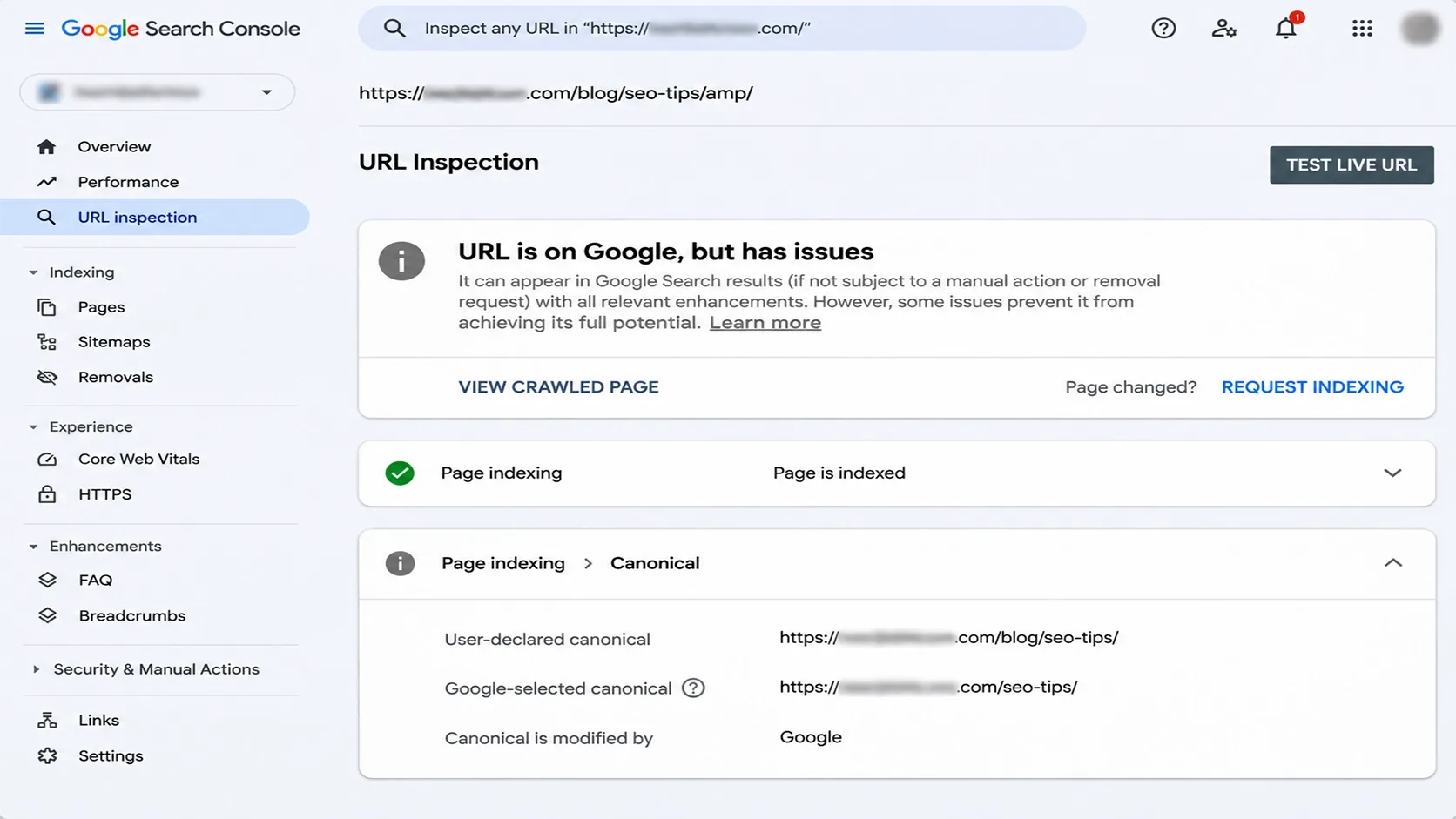
The reality. Modern search needs real architectural discipline. Someone has to control faceted navigation, set canonicals that don't contradict the sitemap, cut index bloat, keep server response times low and write structured data that matches what visitors see.
Google's canonical URL guidance says a canonical tag is a hint, and that conflicting signals, such as a different URL in the sitemap or a redirect, can make Google choose its own version. I've seen a bad template point every product canonical at the homepage, and the whole catalog stopped ranking independently.
Faceted navigation deserves a careful hand. Filters for size, color and price can generate thousands of near-duplicate URLs, and Google's guidance says to consolidate duplicates where you can and block unimportant variants with robots.txt where you can't. An agency that has never made that call on a live catalog will make it on yours.
Schema has rules too. Google's structured data guidelines say you can't mark up content that readers can't see, and that valid markup doesn't guarantee a rich result. An agency promising schema as a ranking trick doesn't understand the rules.
Server speed sits in the same bucket. A slow first byte is usually a hosting and code problem, and an SEO retainer can't fix it alone. Minhaj, our Head of Development, explains the server side in his guide on why your WooCommerce store is so slow.
Real Technical SEO Is Architecture, Not a Plugin
Vareweb's technical SEO covers crawlability, indexability, Core Web Vitals, structured data, and rendering, and optimizes for Google and AI search engines like AI Overviews, ChatGPT, and Perplexity.
What to look for. A named process for crawling your site, ranking the problems by revenue impact and handing the fixes to a developer with clear tickets. Ask for their view on AI search too. They should explain how structured, citable pages get picked up, and I laid out the practical steps in my guide to getting your website cited by AI search engines.
- A real checklist: crawl, indexation, canonicals, redirects, speed and schema, with owners and deadlines. My WooCommerce SEO checklist shows the level of detail I expect.
- Tool honesty: a plugin is a tool, not a strategy. I compared the options in my post on the best SEO plugin for WordPress.
- Store-specific skills: category architecture, faceted URLs and product schema are their own discipline, which is why ecommerce teams look for ecommerce SEO services rather than a generalist retainer.
5. The "Guaranteed Rankings" Red Flag
The agency scam. The agency promises page one in 30, 60 or 90 days. It often attaches a long contract and a monthly fee payable up front.
The reality. Nobody controls Google's algorithm, and Google says so in plain words. A guarantee tells you the agency either lies or plans to use tactics that spike fast and fall faster.
Those tactics carry real consequences. Google's spam policies state that violating sites "may rank lower in results or not appear in results at all," and a manual action can follow human review.
A guarantee can also come true on paper and fail in business. Rank #1 for a keyword with no buyers and you'll have a certificate and no revenue.
What to look for. A data-backed roadmap built from competitor gap analysis, your historical data and your technical debt. Real forecasts show ranges, state their assumptions and run on a 6-to-12-month horizon for competitive commercial terms.
My own proposals follow a simple shape. The first thirty days go to the audit and the fixes that remove blockers, the next sixty to the pages and links that target revenue terms, and the months after that to compounding what works. I write the assumptions into the document so nobody argues about them later.
- Leading indicators: indexation fixes, ranking movement for non-branded commercial terms and growth in qualified clicks within the first quarter.
- Lagging indicators: revenue and lead quality over six to twelve months.
- Flexible terms: a short initial commitment with a clear exit.
Migrations and redesigns deserve special care, since one wrong redirect can erase years of work. I wrote a step-by-step on how to migrate a website without losing SEO rankings that you can hand to any agency you're vetting.
Planning a Redesign or Migration? Protect the Rankings You Already Have.
One wrong redirect can erase years of work. Vareweb handles redesigns and migrations with a technical audit, redirect mapping, and launch checks, so your search visibility carries over to the new site.
The Interview Cheat Sheet: 7 Exact Questions to Ask an Agency
Ask these on the pitch call and write down the answers. A good agency enjoys technical questions, and a bad one starts talking about its "proprietary process."
Question 1: How do you acquire backlinks?
- Right answer: "We run digital PR and manual outreach to authoritative publishers in your industry, and you approve every target site before we pitch."
- Red flag: "We maintain a private network and an outreach team." Any answer that includes a bulk number of links per month.
The link answer tells you more about an agency's ethics than any case study.
Question 2: How does each page we publish add something the top results don't already say?
- Right answer: "We interview your team, use your own data and customer questions, and we map every page to a buyer search before we write."
- Red flag: "We publish four optimized articles a month." Nobody mentions information gain, experts or intent.
Question 3: Which metrics will you report, and how do they connect to revenue?
- Right answer: "Non-branded organic conversions, revenue and assisted conversions from GA4, matched to your CRM, reviewed monthly."
- Red flag: A dashboard of impressions, rankings and traffic with no conversion data.
Question 4: What access do you need, and who owns the accounts?
- Right answer: "You own Analytics, Search Console, the CMS and the domain. We start with read access and ask for more only when the work needs it."
- Red flag: The agency wants to set up accounts under its own login, or it refuses to share data with you directly. Google's hiring guidance says to grant only read access to Search Console during an audit.
Question 5: Walk me through your technical audit. What do you crawl, and what gets fixed first?
- Right answer: "We crawl the full site, check indexation, canonicals, redirects, speed and schema, then rank each issue by revenue impact and write developer-ready tickets."
- Red flag: "We run a site audit tool and send the report." Nobody names priorities or owners.
Question 6: How do you use AI in your process, and what won't you do?
- Right answer: "AI helps with research and drafts, and a subject expert edits everything. We never publish unreviewed AI pages at scale."
- Red flag: "We produce 100 AI articles a month." This is the volume play Google's scaled content policy targets.
Question 7: What happens if we end the contract?
- Right answer: "You keep every asset, report, document and account. We hand over our working files and explain every change we made."
- Red flag: A 12-month lock-in, withheld logins or a fee to release your own content.

FAQs
Should an SEO company require access to my Google Analytics and Search Console?
Yes. They can't audit your site or measure results without that data, and you should own both accounts so you can remove their access at any time. Start with read access, and grant edit access only when specific work requires it. Run if an agency wants to set up accounts under its own login or won't let you see the data.
How long should I give an SEO agency to demonstrate ROI?
Give them six to twelve months for competitive commercial terms, with a first review at ninety days. In that first quarter you should see technical fixes shipped, pages indexed correctly and early movement in non-branded queries. Revenue usually follows later, so judge early progress by leading indicators and not by sales alone.
What is a realistic monthly retainer for legitimate B2B or eCommerce SEO?
The right number depends on competition, site size and how much development and content work the project needs. Divide the retainer by the hours it buys, and ask who does those hours and what they cost. If the math only works with junior staff and templated output, you're buying a package and not a strategy.
Why do some SEO companies charge $500 while others demand $5,000+?
Price follows the experience of the people doing the work and the hours they spend on your account. A $500 retainer leaves almost no room for senior strategy, so the work usually becomes templated posts and low-cost links. A higher fee doesn't prove quality, so check scope, named team members and how they measure revenue.
Do I need a specialized eCommerce SEO company, or can a generalist agency do it?
Online stores have problems that generalists often miss: faceted navigation, duplicate product URLs, category architecture, product schema and variant handling. A generalist can succeed if it has shipped results for stores like yours, so ask to see that work. A team that has never fixed a canonical or filter problem on a real catalog will learn on your budget.
Will an SEO agency fix my website's server response times?
Partly. They can identify slow pages, bloated plugins and caching gaps, but real fixes often need a developer and better hosting. A good agency gives your developer specific tickets and checks the result in Search Console and field data. If an agency claims it will fix everything alone, ask who writes the code.
What happens to my rankings if I fire my SEO agency?
Good work stays. Technical fixes, quality content and earned links keep helping after the contract ends. Rankings built on purchased links or tricks can fall once the agency stops maintaining them, which is a sign the work was fragile. Own your accounts and get written documentation of every change so the next team can continue without starting over.
Ready to Work With an SEO Partner That Shows Its Work?
Book a free call and ask us the seven questions from this guide. Vareweb will answer them straight, then show you what a real plan for your site looks like.

Written by
Kashaf
Kashaf is a veteran SEO specialist with deep expertise in AI SEO, generative engine optimization, ORM, web strategy, and marketing automation. With a Master's in Computer Science, he blends search strategy with technical insight into websites, automation workflows, and AI-driven platforms, helping brands dominate traditional search while adapting to the future of AI-powered discovery.