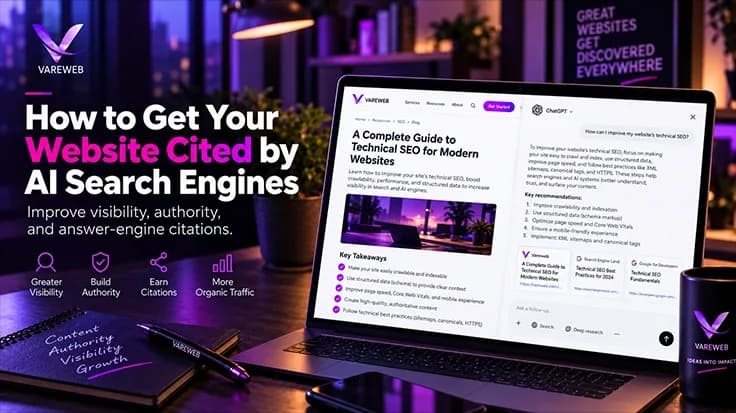
Quick Answer: Getting cited by AI search engines requires more than traditional keyword targeting and backlink building. AI systems benefit from sources that provide clear factual information, original insights or data, strong topical context, and machine-readable structure. This is where Generative Engine Optimization (GEO) extends traditional SEO: publish genuinely useful information rather than repetitive content, organize it with clean semantic HTML and relevant schema markup, and ensure important pages remain accessible to AI crawlers. Emerging files such as llms.txt can provide additional guidance, but they should complement - not replace - crawlable content, structured data, technical SEO, and authoritative source material.
I spend a good chunk of most weeks digging through server logs, and the way LLM crawlers parse a page is fundamentally different from traditional Googlebot. Googlebot renders, indexes, ranks a URL against millions of others. An LLM retrieving for a citation isn't ranking anything - it's asking whether this specific passage answers the question with enough confidence to stake a citation on it. Different question, different math, different winners.
Here's the reality that should reframe the whole conversation: SparkToro and Similarweb's 2026 clickstream study found that 68.01% of US Google searches in the first four months of 2026 ended without a click at all, up from 60.45% just two years earlier. Two out of three searches now resolve without anyone reaching a website - which means the actual prize has quietly shifted from ranking to being the answer itself. This applies whether you're running a SaaS product, a publication, a local practice, or a retail brand; while we primarily build these AI-ready data architectures through our eCommerce web development services, the exact same principles of structuring data for machine confidence apply identically to B2B SaaS, healthcare, and digital publishers.
Give AI Search a Reason to Reference Your Business
Your team has experience, customer insights, and answers competitors cannot simply copy. Vareweb helps turn that knowledge into focused content with original evidence, clear attribution, and useful answers that support your SEO, GEO, and AEO strategy.
Quick Overview: The 7 GEO Strategies
| # | Strategy | What It Does | Core Mechanism |
|---|---|---|---|
| 1 | Optimize for Information Gain | Gives AI systems a reason to reference your source specifically | Original data, surveys, research, and expert insights |
| 2 | Implement llms.txt | Provides AI agents with a clean, text-based summary without requiring complex page rendering | Markdown file placed at the domain root |
| 3 | Structure Data With JSON-LD | Reduces ambiguity around entities, content, relationships, and key facts | Organization, Article, FAQPage, and other relevant schema types |
| 4 | Write for Extraction | Makes important passages easier to understand and reuse as self-contained answers | Inverted-pyramid writing, tables, concise answers, and descriptive headings |
| 5 | Build Entity Resolution | Strengthens signals that your brand or organization is a consistent, identifiable entity | Digital PR, consistent business information, authoritative mentions, and backlinks |
| 6 | Quote Real SMEs | Adds identifiable human expertise and first-hand perspective to the content | Named authors, relevant credentials, expert commentary, and direct quotes |
| 7 | Manage Crawler Access | Lets you control which automated systems can access different parts of your website | robots.txt rules and separate policies for search, answer-engine, and training crawlers |
The Paradigm Shift: Ranking vs. Citing
Traditional search ranks a page against a query using link graphs, keyword relevance, and a hundred other signals refined over two decades. An LLM answering through retrieval-augmented generation does something structurally different: it retrieves a set of candidate passages, scores each for extractability and confidence, then generates a synthesized answer and decides, passage by passage, which sources earned a citation.
Here's the operational reality of how ChatGPT decides which link goes in its footnotes: if the model already has your baseline fact memorized from training data, it has no reason to fetch your page at all. It only reaches for the live web when it needs something training data doesn't have - new information, a specific number, a claim it can't verify from memory. If your content just restates what's already common knowledge, you're invisible to that retrieval step by design, not by accident.
The shift isn't just fewer clicks - it's more surface area for AI to answer instead of you. Comscore's own Q2 2026 AI Intelligence Report found AI Overviews appearing on 39.4% of US desktop Google searches in June 2026, up from 25.8% just eleven months earlier - a genuine acceleration, not a plateau. Zero-click and AI Overview growth are two measurements of the same underlying change: the query gets answered before a human ever has to choose a source, which makes the source the model actually picks the only visibility left worth fighting for.
Mapping entity relationships for brands trying to become known quantities to large language models has taught me the same lesson from a different angle: the model isn't reading your page and forming an opinion the way a human editor might. It's running a scoring pass across every candidate passage retrieved for a given query, and the passages that survive that pass share specific, identifiable traits - not vague ones like "good writing" or "trustworthy tone," but structural, factual traits a system can actually measure.
Tips To Get Your Website Cited By AI Search Engines
Tip 1: Optimize for Information Gain
Information Gain is the entire game. If an LLM's training data already contains the baseline answer to a question, it only goes looking for new context - a number, a quote, a finding that doesn't already exist inside its own weights. Content that echoes the same explanation as the next twenty search results has nothing to offer that retrieval step.
This means original survey data, a genuinely unique operational insight, or a specific finding nobody else has published all outweigh a well-written 3,000-word piece that restates common knowledge in slightly different words. When I sit down to restructure a site for Generative Engine Optimization, the first thing we kill is the regurgitated filler content - not because it's badly written, but because an LLM has no mathematical reason to cite writing quality. It cites facts it can't get anywhere else.
This applies identically whether the site is a SaaS product publishing usage benchmarks from its own customer base, a local clinic sharing real patient-outcome patterns anonymized appropriately, or a publisher running its own original survey instead of aggregating three other outlets' coverage of the same press release. The industry changes. The underlying requirement - say something the model can't already generate on its own - doesn't.

Tip 2: Implement the llms.txt Standard
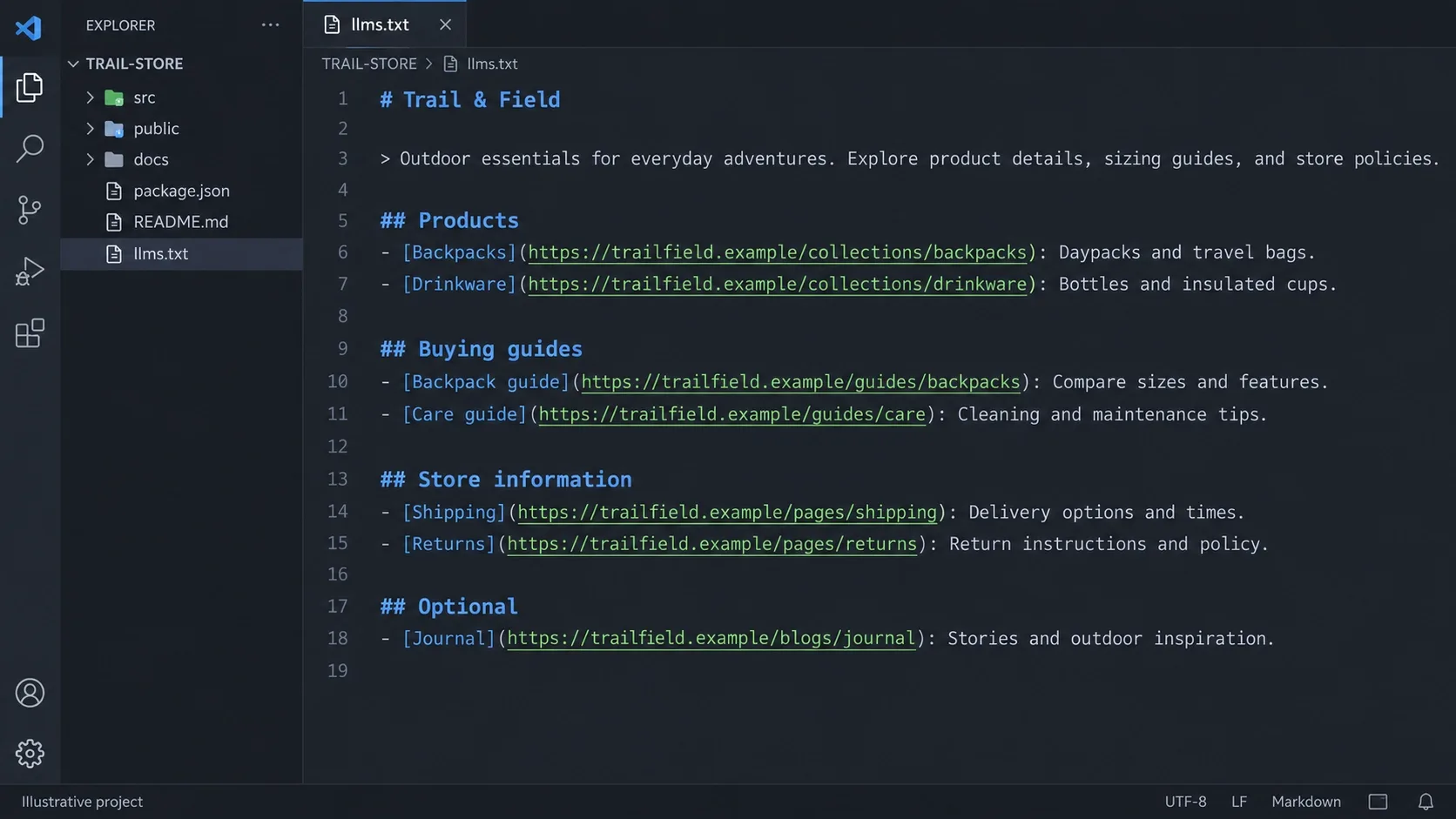
llms.txt is a Markdown file at your domain root - think robots.txt, but instead of telling crawlers what they're allowed to fetch, it hands language models a clean, curated summary of what your site actually contains, without requiring a single line of JavaScript to render first.
Adoption is still genuinely early - one independent July 2026 crawl across nearly 11,000 domains found llms.txt sitting at 7.4% adoption, which cuts two ways: it's not yet a competitive necessity, and it's still cheap, uncrowded ground to claim before it becomes one. A SaaS company should use it to summarize core product value propositions and documentation structure. A publisher should summarize editorial sections and cite policies. The format is flexible enough that the value proposition, not the template, is what does the work.
Tip 3: Structure Data for Machine Confidence
AI needs factual certainty the way a human reader needs context - except a machine can't infer it from tone or design cues. JSON-LD now runs on 55.5% of the web, and that share climbs higher among top-ranked sites specifically, which tells you something about where the correlation between structured data and visibility is already heading.
This isn't an ecommerce-only concern. Organization schema confirms who you are. Article schema confirms authorship and publish date. SoftwareApplication schema tells an agent exactly what a SaaS product does and what it costs. FAQPage schema hands over pre-structured question-and-answer pairs built for exactly the kind of extraction an LLM performs. If ChatGPT can confirm, via schema, that you're the verified author of a specific statistic, it has a concrete reason to cite you instead of a rewritten version of the same number sitting on a page with no attribution at all. I go deeper on the template-level implementation in How Schema Markup and Web Design Work Together.
None of this lives in a separate lane from how the page actually looks, either. A designer choosing where the price sits on the page and a developer writing the Offer schema for that same price are describing the same fact twice, and the two descriptions have to agree - which is exactly why Custom Web Design and structured data get planned together on any build we run, not handed off as separate checklists at the end. UI/UX Design decisions about hierarchy and emphasis are, from a crawler's perspective, decisions about which facts on the page matter most - the visual layer and the machine-readable layer are two views of one underlying model, not two independent jobs.
The failure mode I see most often isn't missing schema - it's contradictory schema. Two plugins both outputting Organization markup with slightly different founding dates. A migrated site still carrying Article schema pointing at a byline nobody's worked there in two years. Machine confidence doesn't average out a contradiction the way a human skimming the page might; it just treats the whole entity as less reliable.
Your Best Answer Should Be Easy to Find and Read
Useful content needs a website that makes it accessible. Vareweb brings page hierarchy, semantic HTML, relevant schema, and performance together so visitors can find your answers and search systems can understand the information behind them.
Tip 4: Write for Extraction
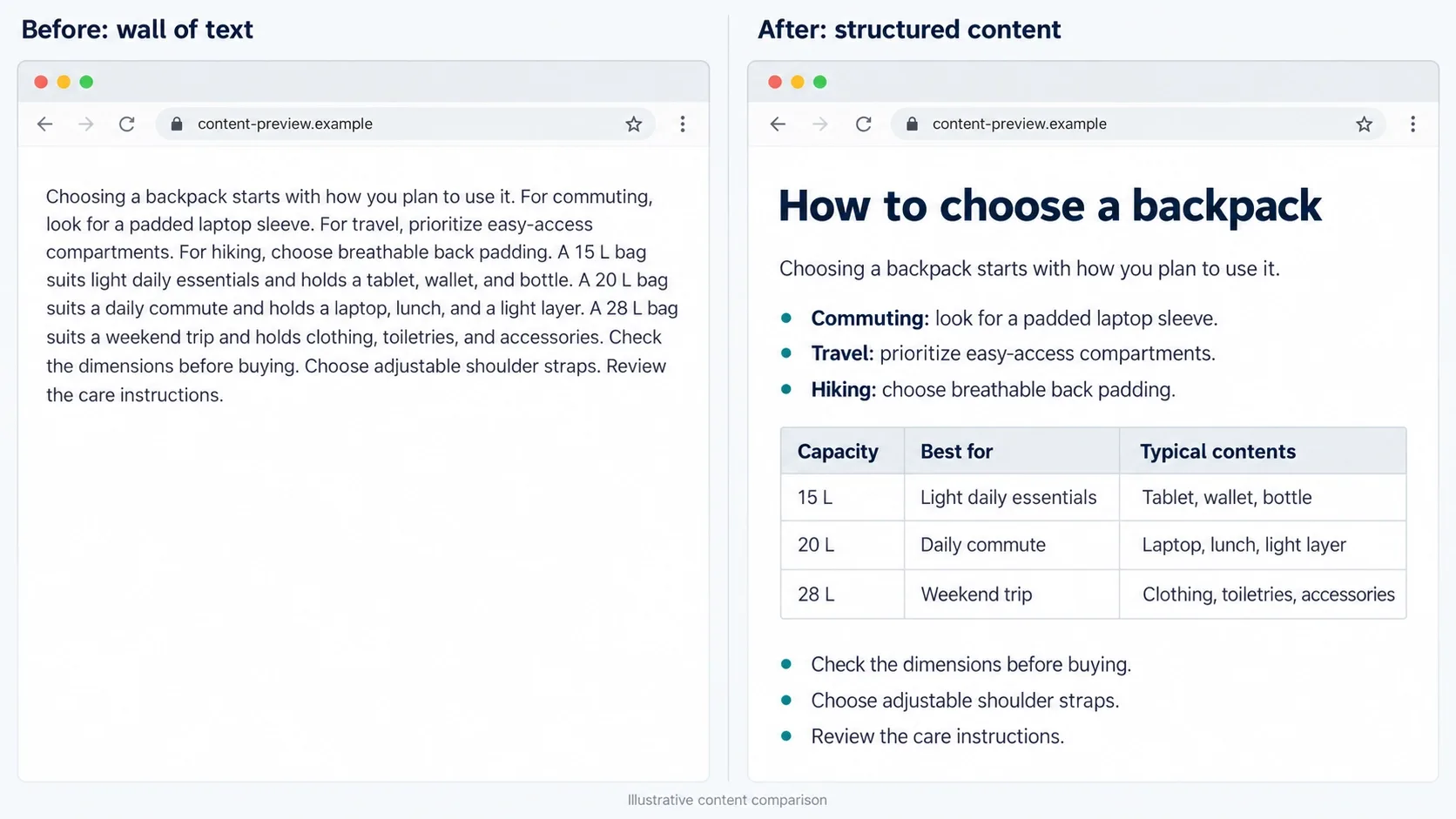
LLMs parse semantic HTML, not prose style. A page with crisp H2 headings, genuine bullet lists, and real table markup dramatically outperforms a wall of unstructured paragraphs for one simple reason: extraction is a structural operation, not a comprehension one. The model isn't grading your writing. It's identifying which chunk of the DOM answers the question cleanly enough to lift on its own.
Lead every section with the inverted pyramid - answer the question directly in the first sentence or two, then expand with supporting detail after. A model extracting a passage for a conversational answer won't go hunting three paragraphs down for the actual answer buried under throat-clearing preamble. This is fundamentally an information-architecture discipline as much as a writing one, and I cover why that structure compounds across a whole site in Why Website Structure Matters for SEO and User Retention.
Test this on your own cornerstone pages the honest way: pick a question that page is supposed to answer, then time how long it takes to find the actual answer reading top to bottom. If it takes more than two sentences, an LLM performing the same extraction is skipping past the same preamble a human reader would - except the human at least scrolls. The model just moves to the next candidate passage.
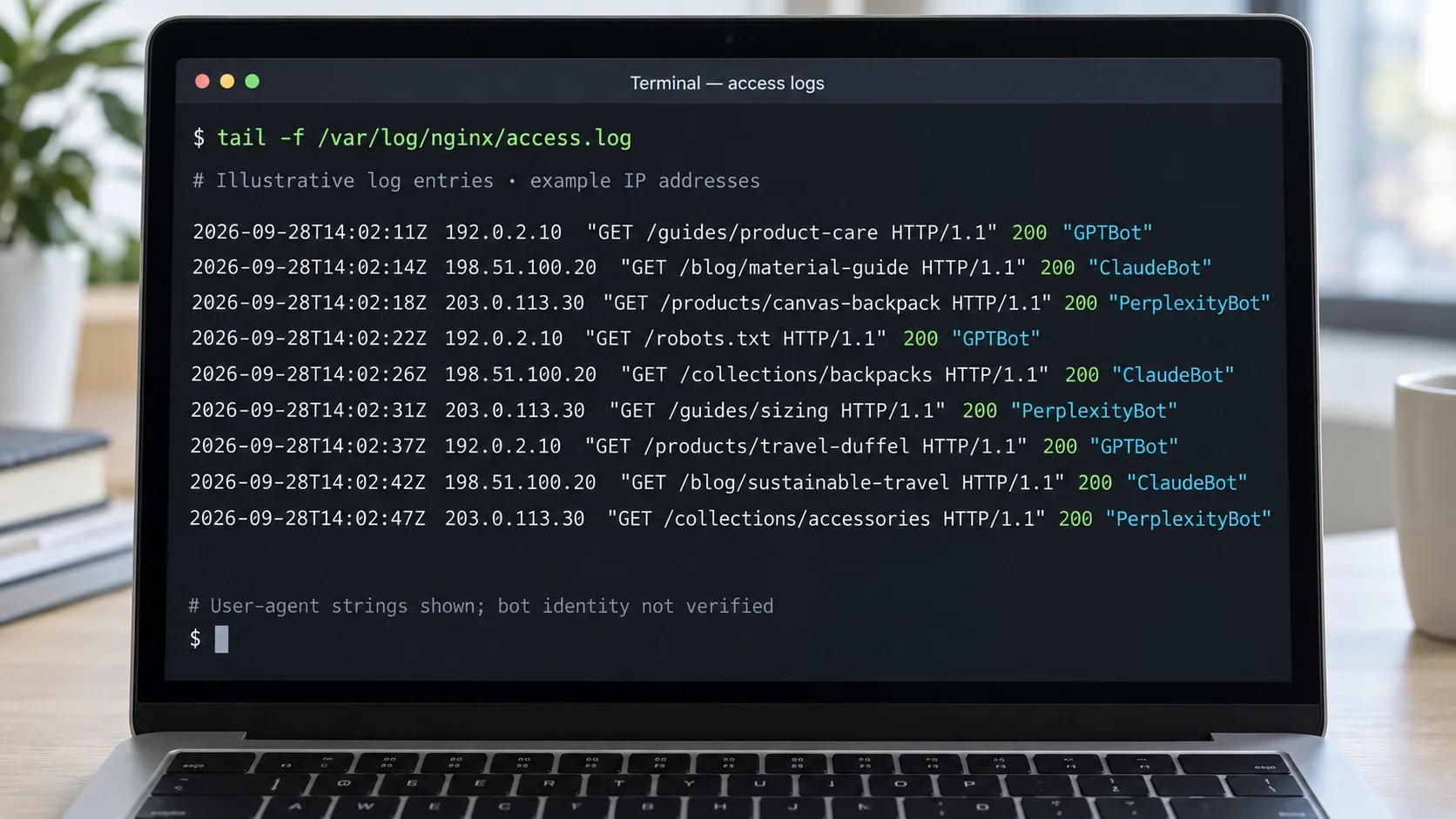
None of this matters if the crawler never reaches the structured content in the first place. Perplexity, ClaudeBot, and most AI search crawlers read raw server-delivered HTML rather than executing JavaScript the way Googlebot does, so a page that renders its answer client-side can have flawless headings and tables that no retrieval system ever sees. Speed compounds the same problem - a crawler working through a fetch budget across millions of pages doesn't wait out a slow server the way a patient human might. I go deeper on what actually moves load times in How Important Is Page Speed for SEO in 2026? and 10 Best UI/UX Design Tips for Good Core Web Vitals, and the same discipline extends directly to genuinely accessible markup - a screen reader and an AI crawler are both, in the end, machines trying to parse meaning out of your DOM without a pair of human eyes to paper over the gaps. Get that layer wrong on mobile specifically and you're excluding roughly half of all web traffic globally, human and machine alike.
Tip 5: Entity Resolution and Digital PR
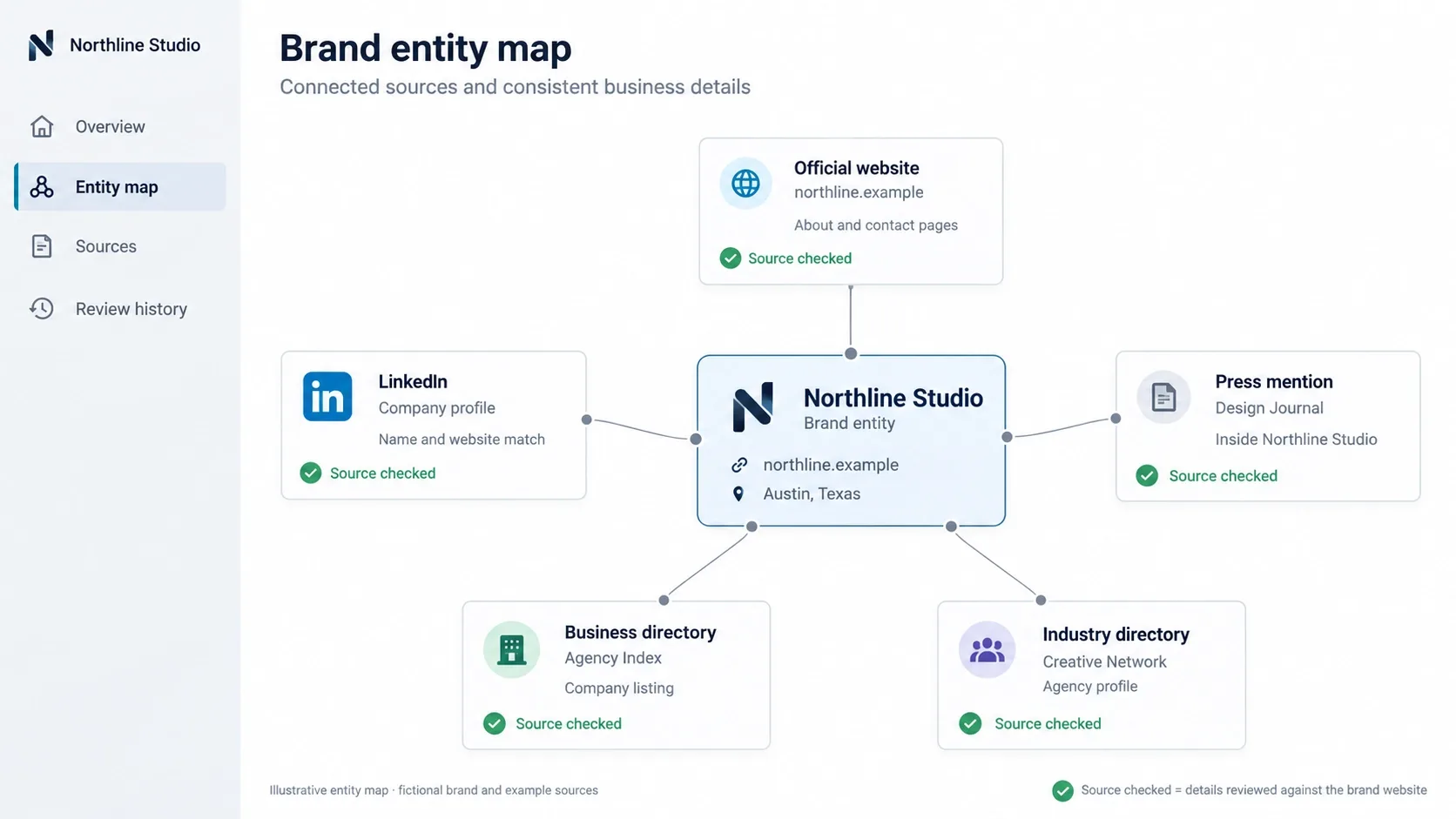
AI engines don't think in web pages. They think in entities - a brand, a person, a product, grouped and cross-referenced across every source that mentions them. If your entity is consistently associated with a specific topic across podcasts, digital PR placements, and genuinely reputable backlinks, the model becomes mathematically more confident treating your domain as the authoritative source for that topic specifically.
This is where consistency matters more than volume. The same name, the same description, the same core facts about your organization repeated accurately across every mention - your own site, LinkedIn, industry directories, guest appearances - build exactly the cross-referenced confidence an entity resolution system is designed to detect. A single high-authority inconsistency, a wrong founding date, a mismatched product description, does more damage to that confidence than most marketers assume.
Explained to a panicked marketing team once, this reduces to something genuinely simple: an entity a model can confirm from five independent sources is a safer citation than one it can only find in a single place, however well-written that single place is. Digital PR done for entity resolution isn't chasing domain authority anymore - it's building a redundant, cross-verified record of who you actually are.
Tip 6: Quote SMEs and Build Real E-E-A-T
AI systems are increasingly trained to identify genuine human expertise specifically to combat the flood of AI-generated content competing for the same citations. A page with no named author, no credentials, and no traceable expertise reads as exactly the kind of content the model is built to be skeptical of.
Direct quotes from credentialed subject matter experts, authors with real, verifiable LinkedIn profiles, and named practitioners with a traceable professional history all signal a different category of source. I cover what an actually convincing version of this looks like - not a generic bio paragraph - in 15 Tips to Write an About Us Page That Builds Trust. The specificity is what does the work: "a nurse practitioner with twelve years in cardiac care" carries verifiable weight. "Our team of experts" carries none.
Worth naming plainly, since it's exactly where a citation strategy matters most: ChatGPT alone commands roughly 79% of global AI chatbot usage as of August 2026, with the rest split across Gemini, Perplexity, and the others. E-E-A-T signals built to survive scrutiny on one major engine generally transfer cleanly to the rest, which is a rare case of not needing to build five separate strategies for five separate platforms.

Tip 7: Manage Crawler Access Properly
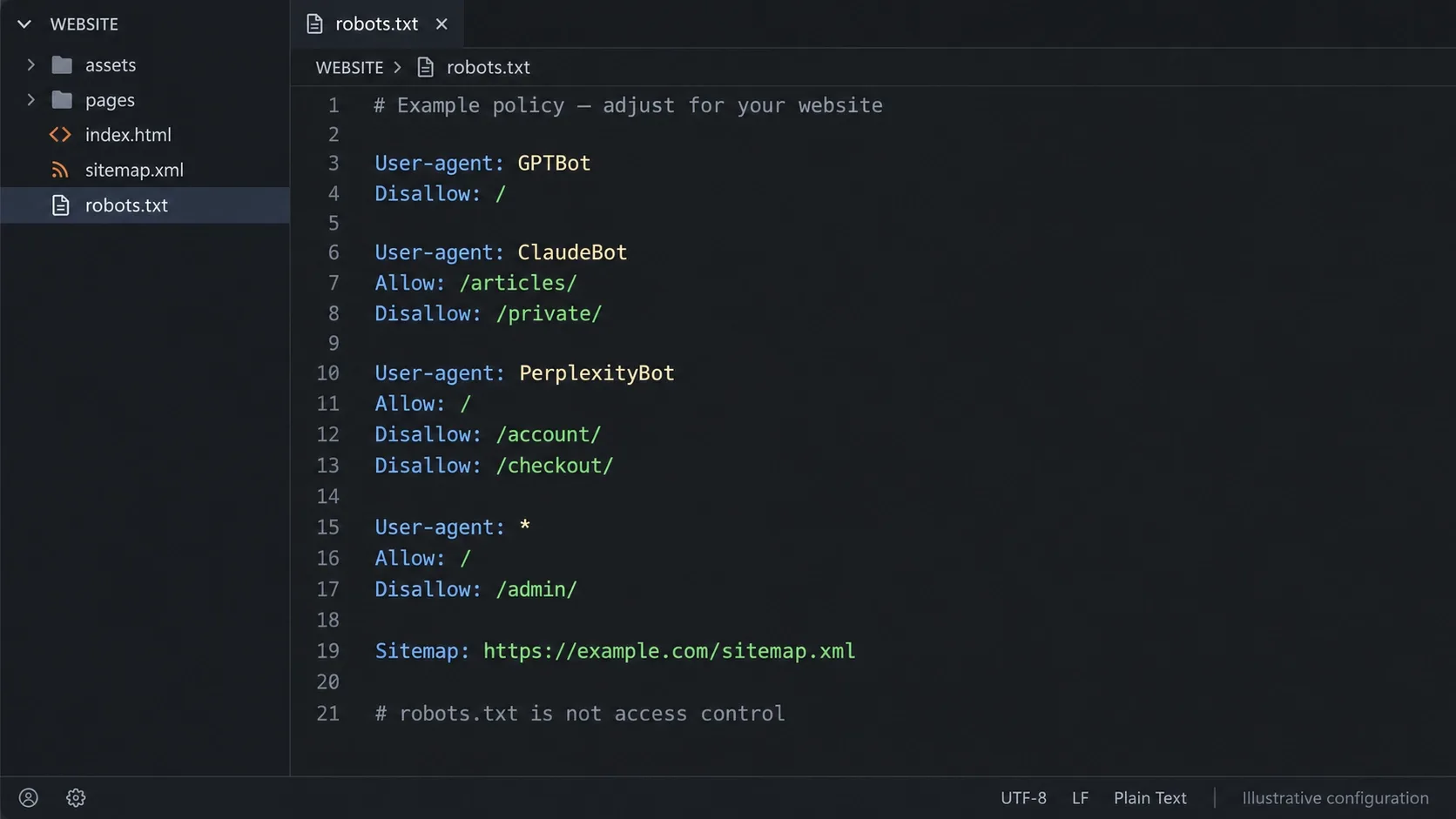
A genuinely large share of sites block GPTBot, ClaudeBot, or CCBot in robots.txt out of a reasonable fear of AI training on their content, then quietly wonder why they never get cited. One July 2026 crawl of nearly 11,000 domains put the whole-web GPTBot block rate at 7.9%, climbing to 50.5% among news publishers specifically - and the same research found something genuinely counterintuitive worth sitting with: in a sample of Google AI Mode citations, 51.9% of cited domains blocked at least one AI crawler in robots.txt, against a 15% block rate in the broader sample. Blocking a training bot doesn't automatically block you from being cited.
The strategic move is separating the two categories deliberately rather than reflexively blocking everything with "AI" in the name. Block training-only crawlers if that's a genuine policy stance for your organization. Allow the answer-engine crawlers - the ones actually retrieving content to generate a citation - explicit, verified access. I cover the full technical breakdown of which bots belong in which category in Tips to Build AI-Agent-Friendly Websites, and getting this distinction wrong is one of the most common, most avoidable reasons a site with genuinely good content never shows up in a single AI answer.
Is Your Website Blocking the Crawlers You Want to Reach?
A robots.txt rule, security setting, or rendering issue can keep important pages out of reach. Vareweb can review your technical setup, identify access barriers, and help separate search crawler access from your policies on AI training.
Check this today, not next quarter: pull your live robots.txt and read it the way a bot would, not the way you remember writing it eighteen months ago. Plugin updates, CDN configuration changes, and security tooling all have a habit of adding blanket bot rules nobody signed off.
FAQs
Does traditional SEO still matter if I'm optimizing for AI search?
Yes, directly - most AI engines retrieve from indexes traditional SEO already targets, and strong technical SEO fundamentals are a prerequisite for GEO, not a replacement for it. Weak classic SEO puts a hard ceiling on how well any citation strategy can perform.
How do I track referral traffic from ChatGPT and Perplexity?
Build a custom channel grouping in your analytics platform isolating referrals from chatgpt.com, perplexity.ai, and similar domains. Volume is often still modest, but the growth trend is the number worth watching monthly.
Should I block AI bots from my website?
Separate the decision by bot category rather than blocking everything labeled AI. Training-only crawlers are a legitimate policy choice to restrict; answer-engine crawlers retrieving content for live citations need access, or you simply become invisible to that engine.
What is Generative Engine Optimization (GEO)?
The practice of structuring content and data so AI systems can retrieve, trust, and cite it with confidence - covering Information Gain, structured data, semantic formatting, and verified crawler access, as opposed to traditional SEO's focus on ranking positions.
How long does it take for an LLM to update its citations with new content?
There's no fixed window - it depends on how frequently the engine refreshes its retrieval index for your domain and how quickly your content propagates through it. Weeks is a realistic expectation, not days.
Does domain authority matter for AI Overviews?
Indirectly - a meaningful share of AI Overview citations overlap with strong existing organic rankings, so authority still helps. But a smaller, highly specific source with genuine Information Gain can outrank domain authority for a narrow query an authoritative generalist site never actually answered well.
What is an llms.txt file and how do I create one?
A Markdown file at your domain root summarizing your site's purpose, structure, and key sections for AI agents. Create it as a plain text file named llms.txt, following the emerging community format at llmstxt.org, and publish it at yourdomain.com/llms.txt.
Can a small or newer site realistically get cited over an established competitor?
Yes, when the smaller site genuinely has something the competitor doesn't - original data, a more specific answer, a credentialed author. Citation selection rewards Information Gain over brand size, which is a meaningfully different game than traditional ranking.
Ready to Build a Website Worth Citing?
Put these seven strategies into a practical plan for your business. Vareweb connects technical SEO, expert-led content, and website development to strengthen your search presence and improve your opportunities to appear in AI answers. Start with a conversation about where your website stands.

Written by
Kashaf
Kashaf is a veteran SEO specialist with deep expertise in AI SEO, generative engine optimization, ORM, web strategy, and marketing automation. With a Master's in Computer Science, he blends search strategy with technical insight into websites, automation workflows, and AI-driven platforms, helping brands dominate traditional search while adapting to the future of AI-powered discovery.